

A Direct Message | Street Art
Title :
A Direct Message | Street Art
Location :
Thrissur Town
Medium :
Printed posters and a Photo Blog accessed by a QR code
Year :
2012
Photographs by :
LRa
In 2012, Thrissur was living through a quiet, toxic normalcy.
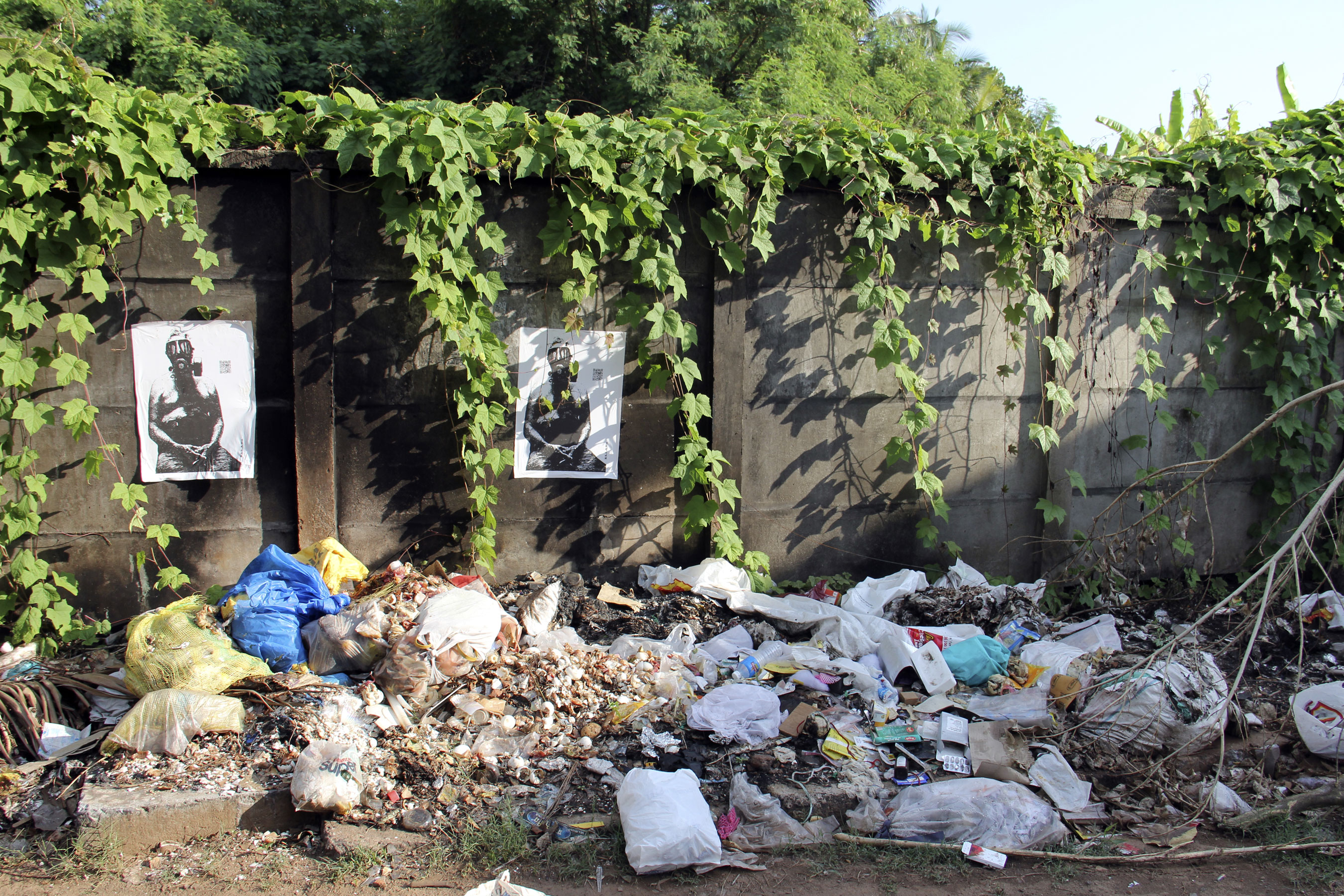
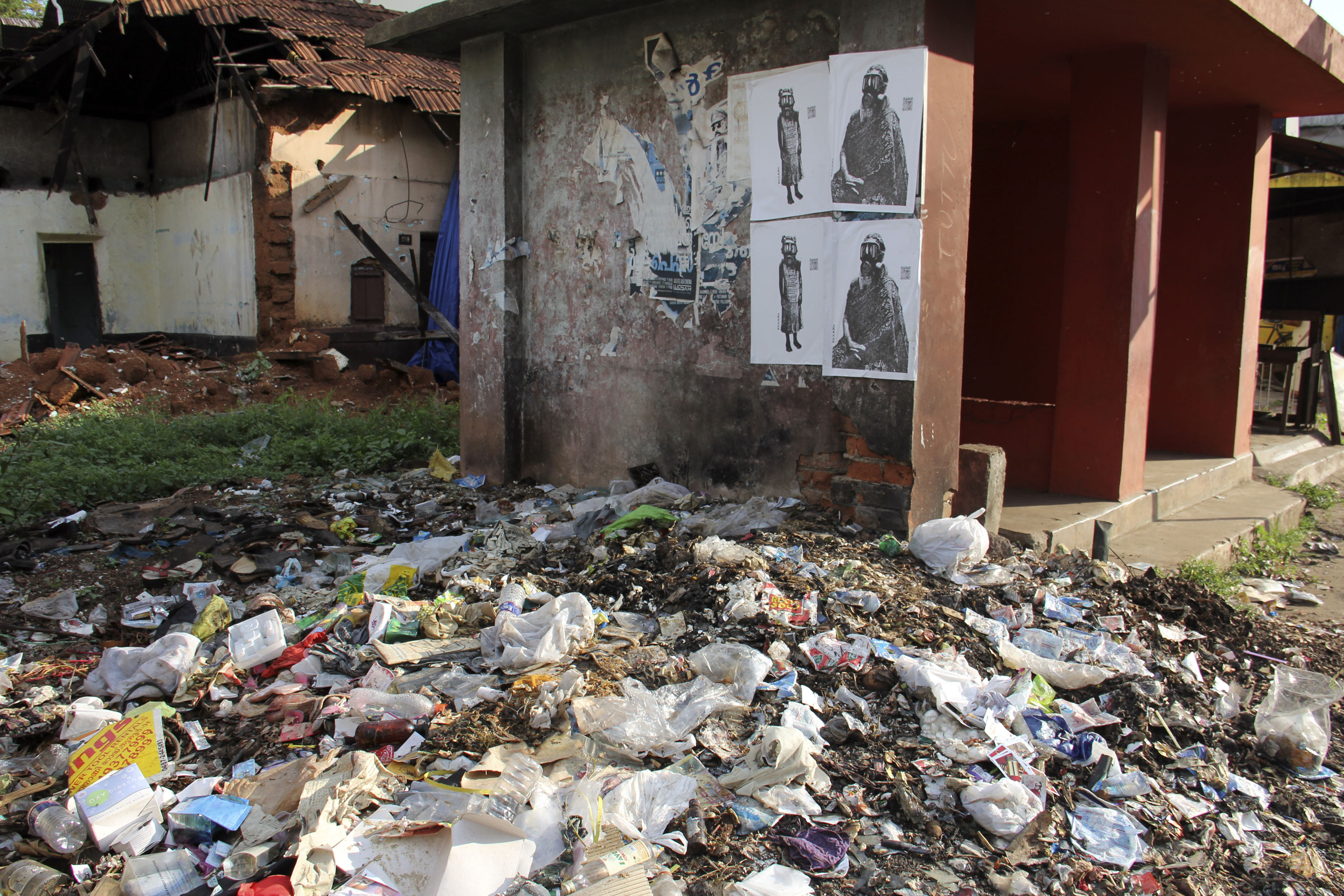
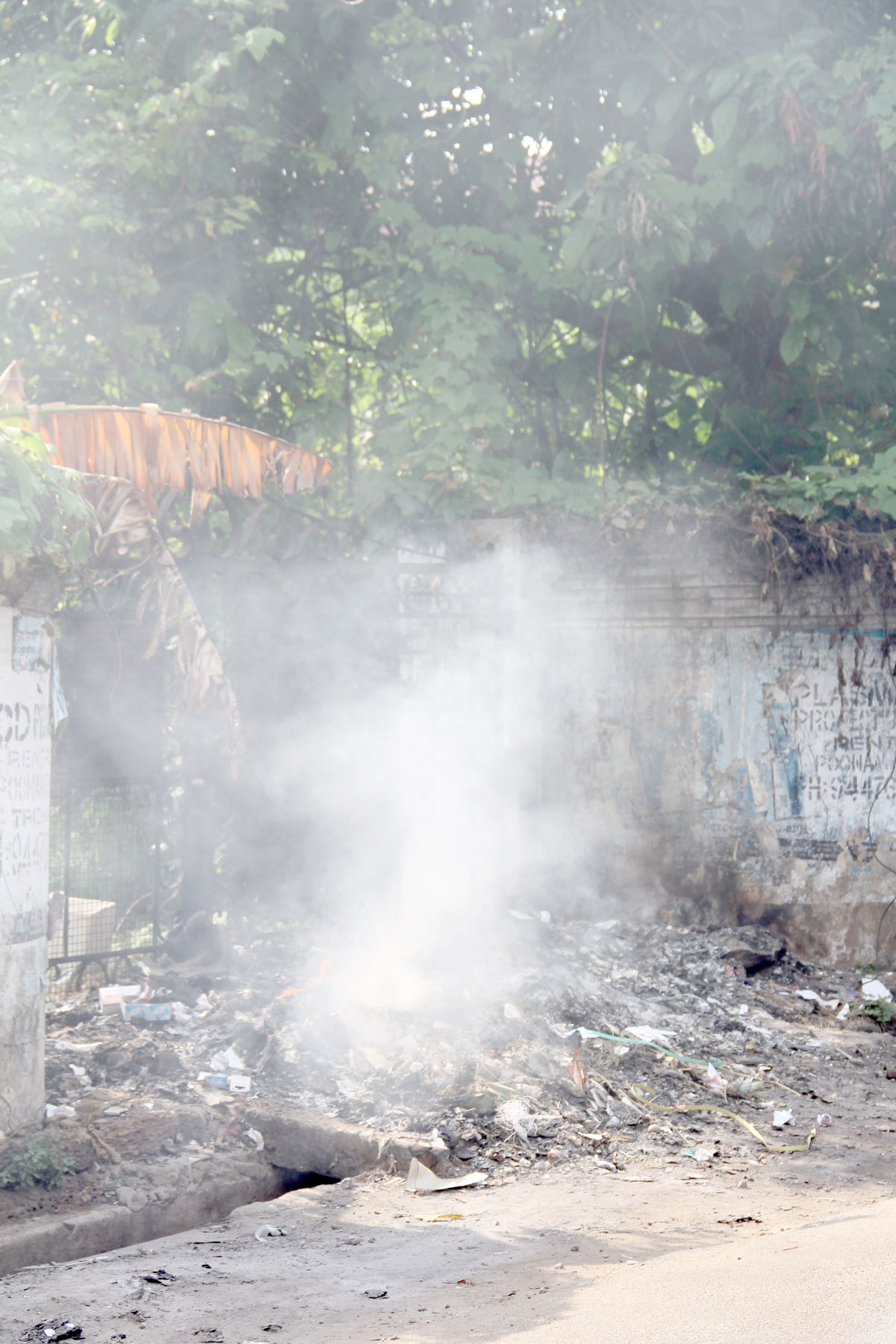
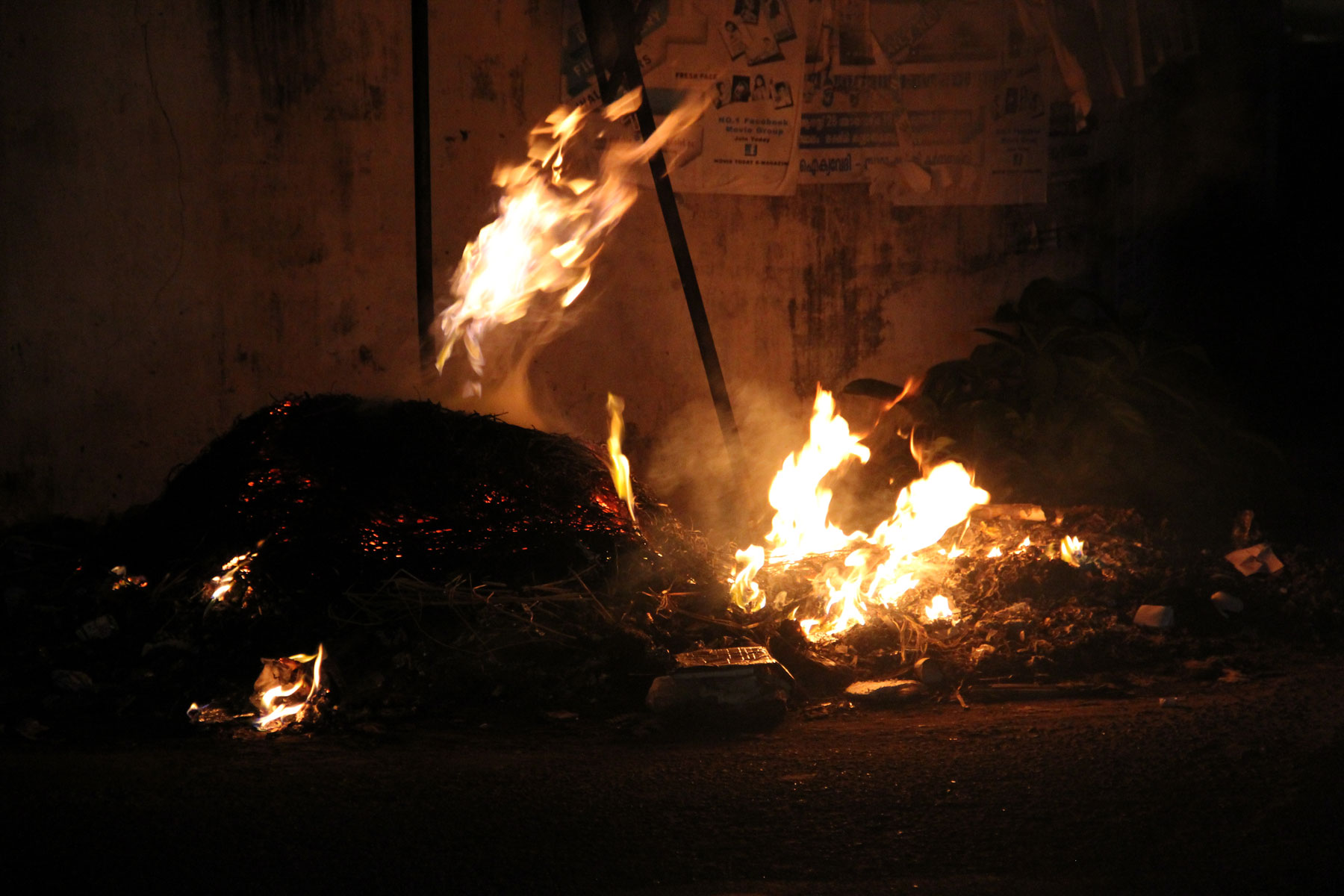
Waste gathered in street corners, against compound walls, beside bus stops, under trees. When the piles grew too large to ignore, they were not cleared. They were burned. Corporation teams would arrive, set fire to the heaps, and leave. What remained was not absence, but residue. Smoke that travelled through neighbourhoods. Ash that settled into homes. Air that stayed heavy long after the flames died.
This work began as a response to that condition.
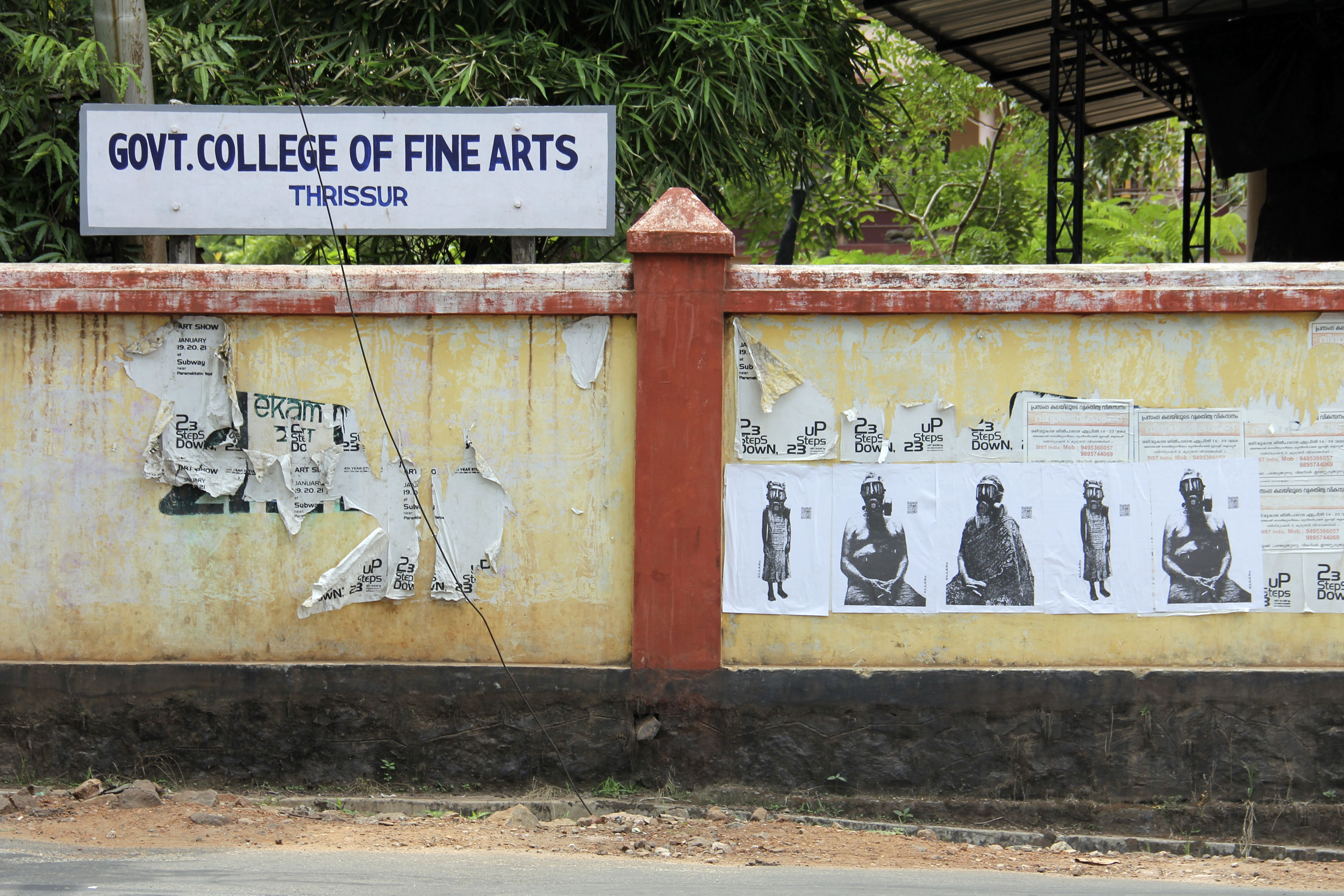
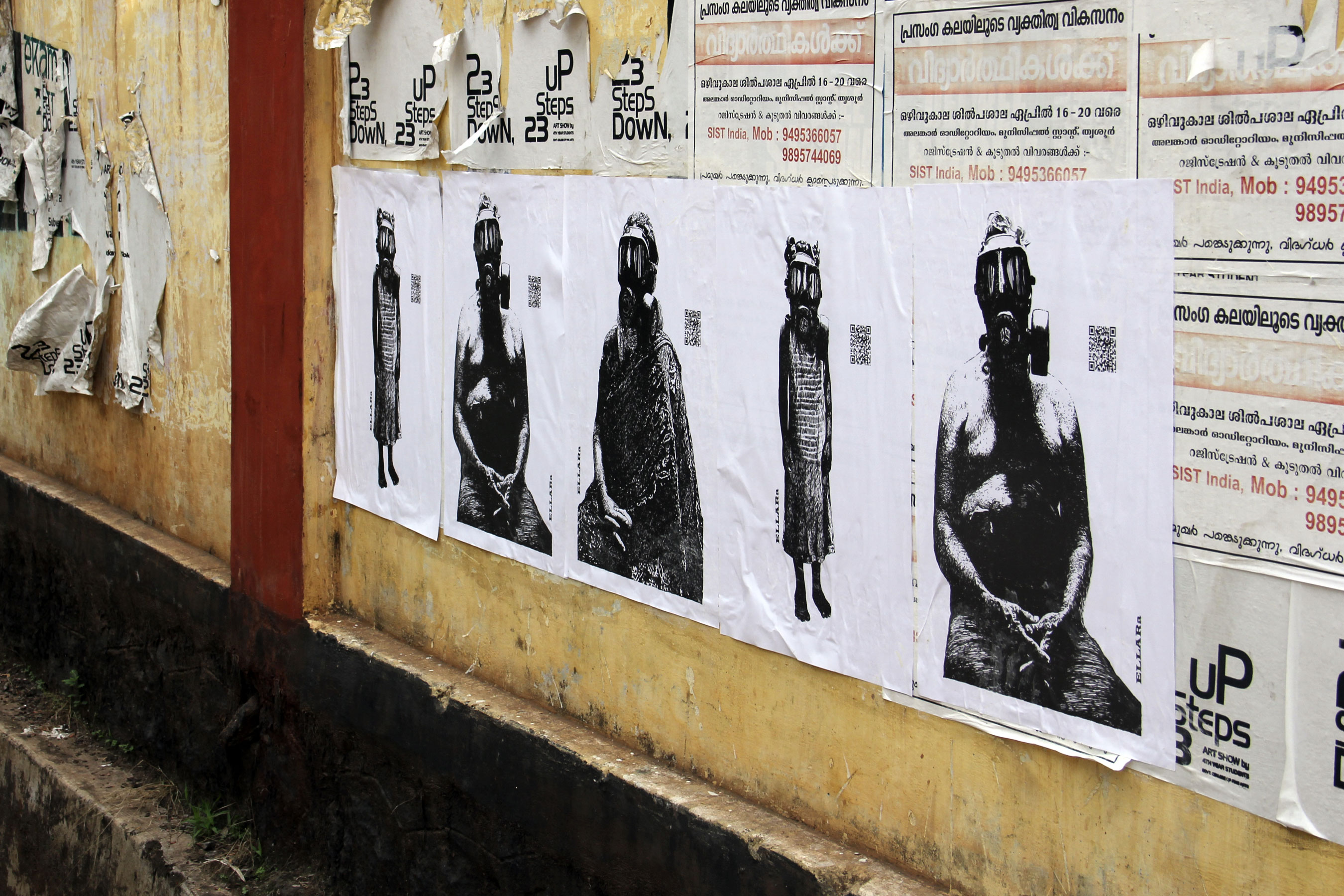
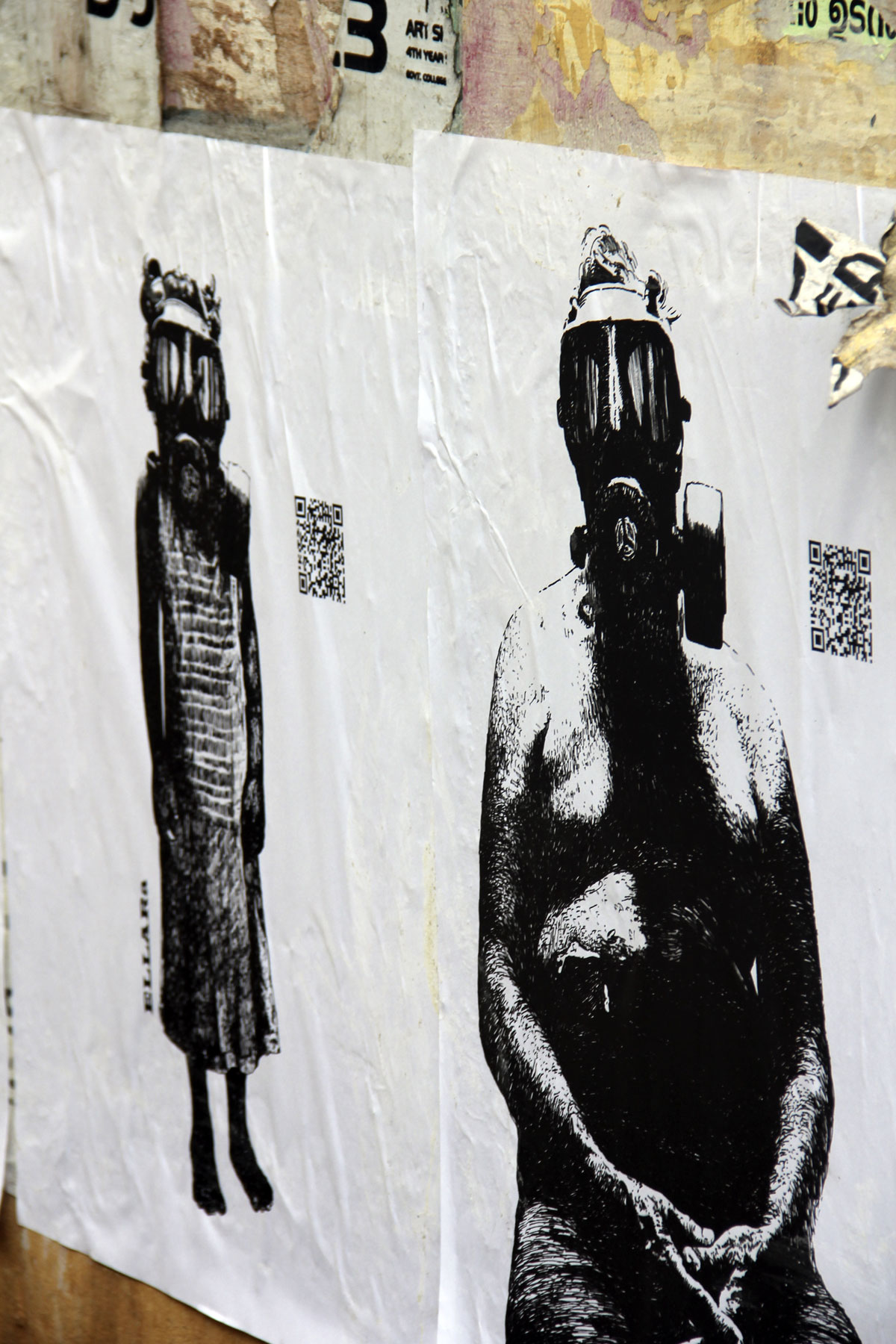
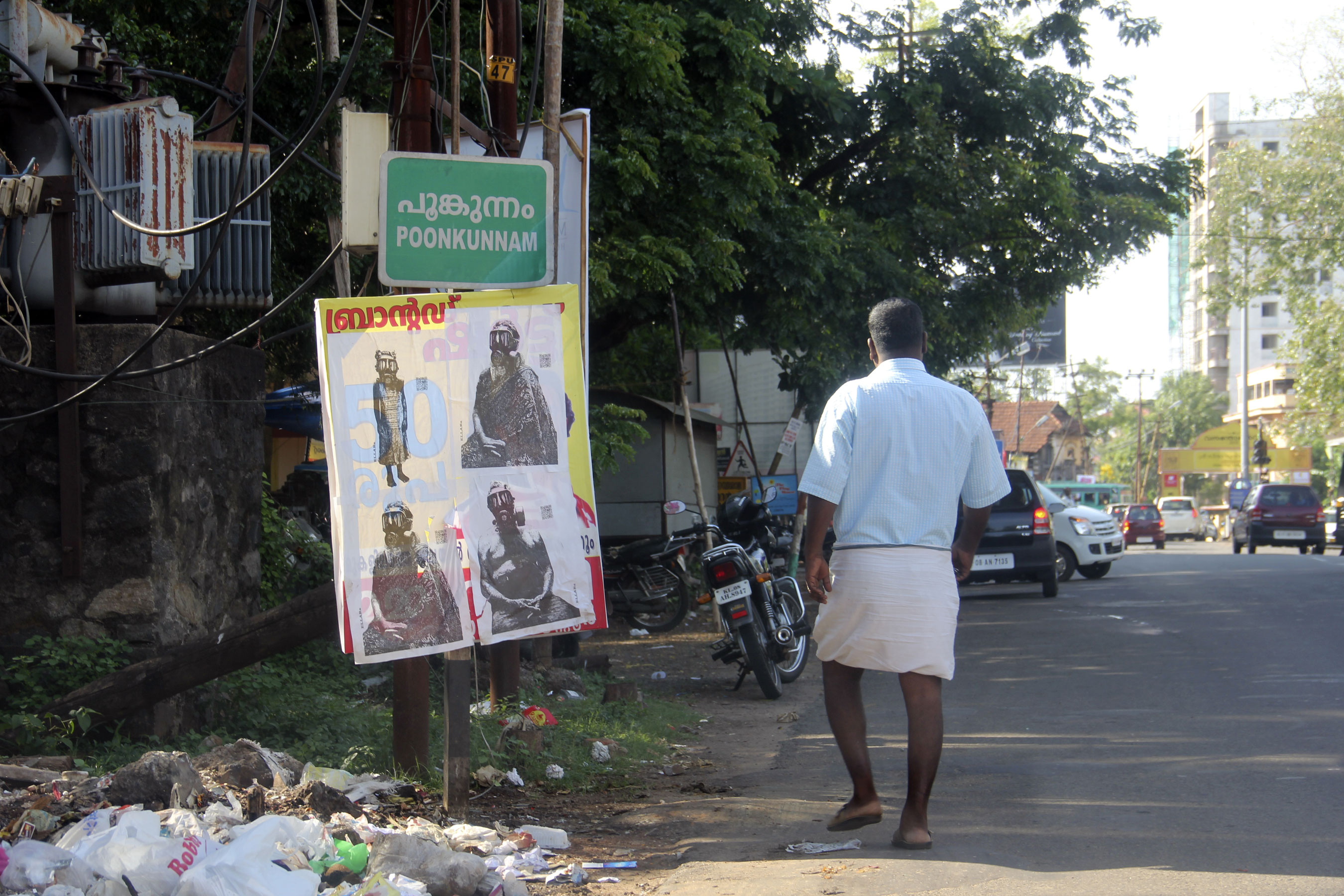
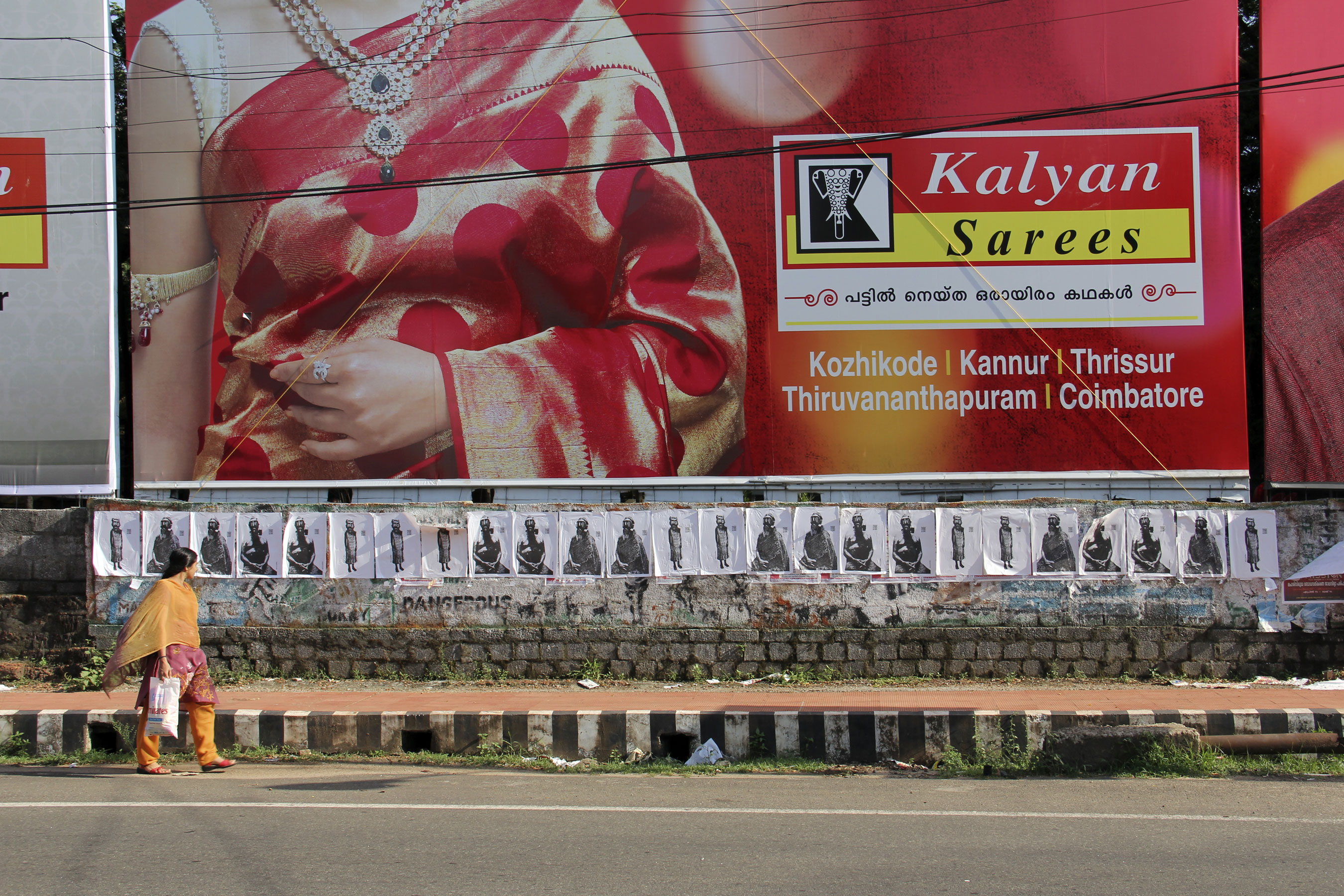
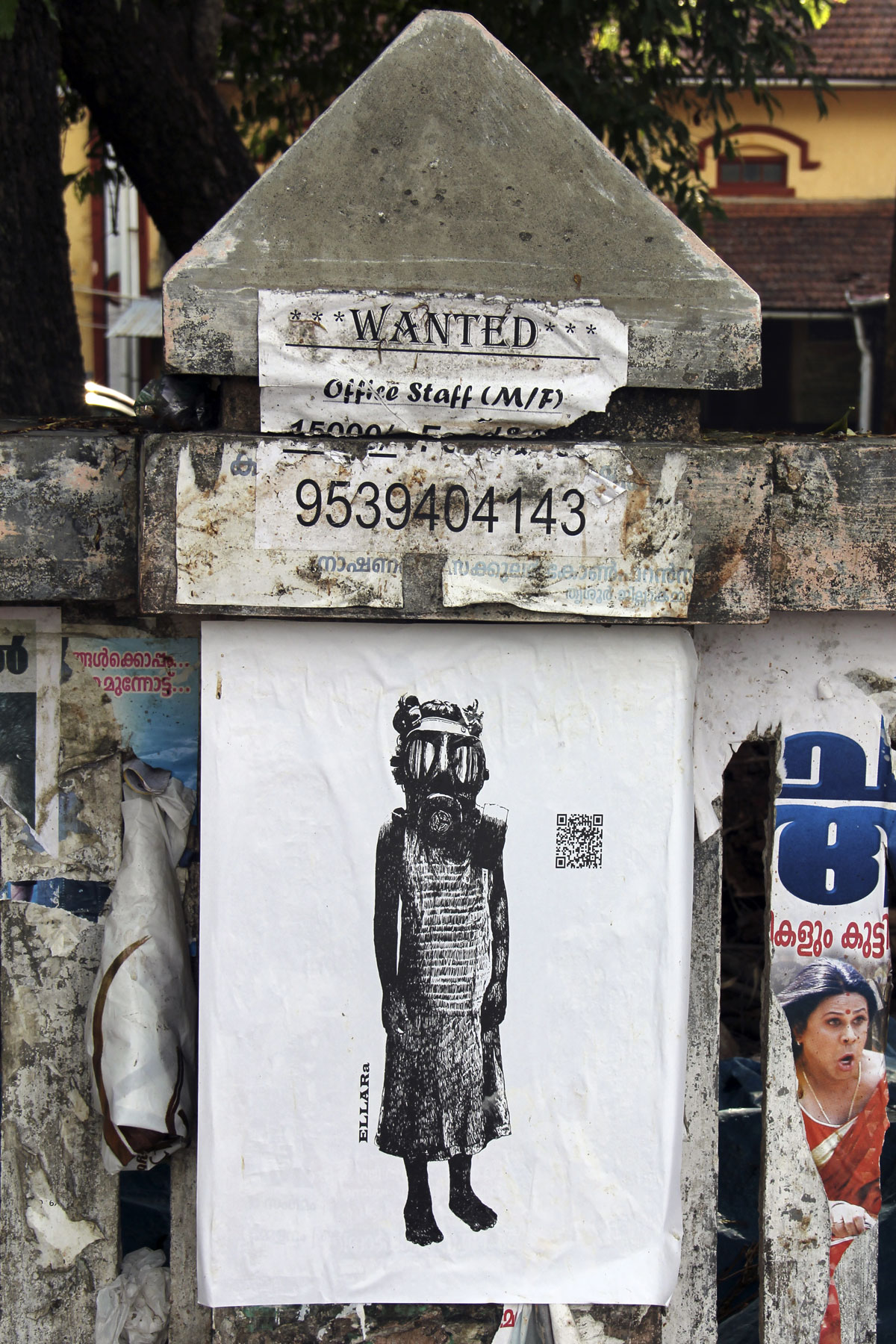
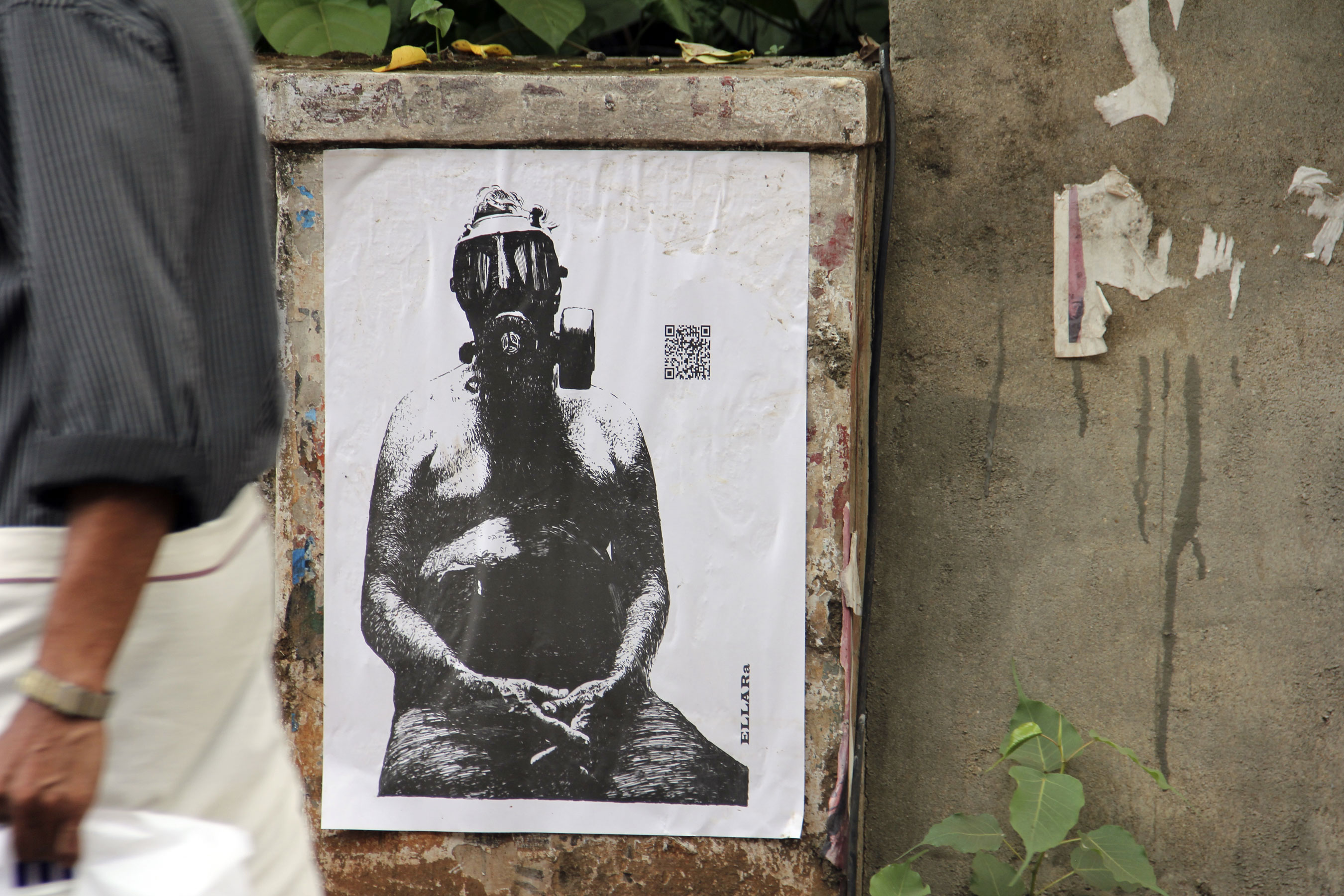
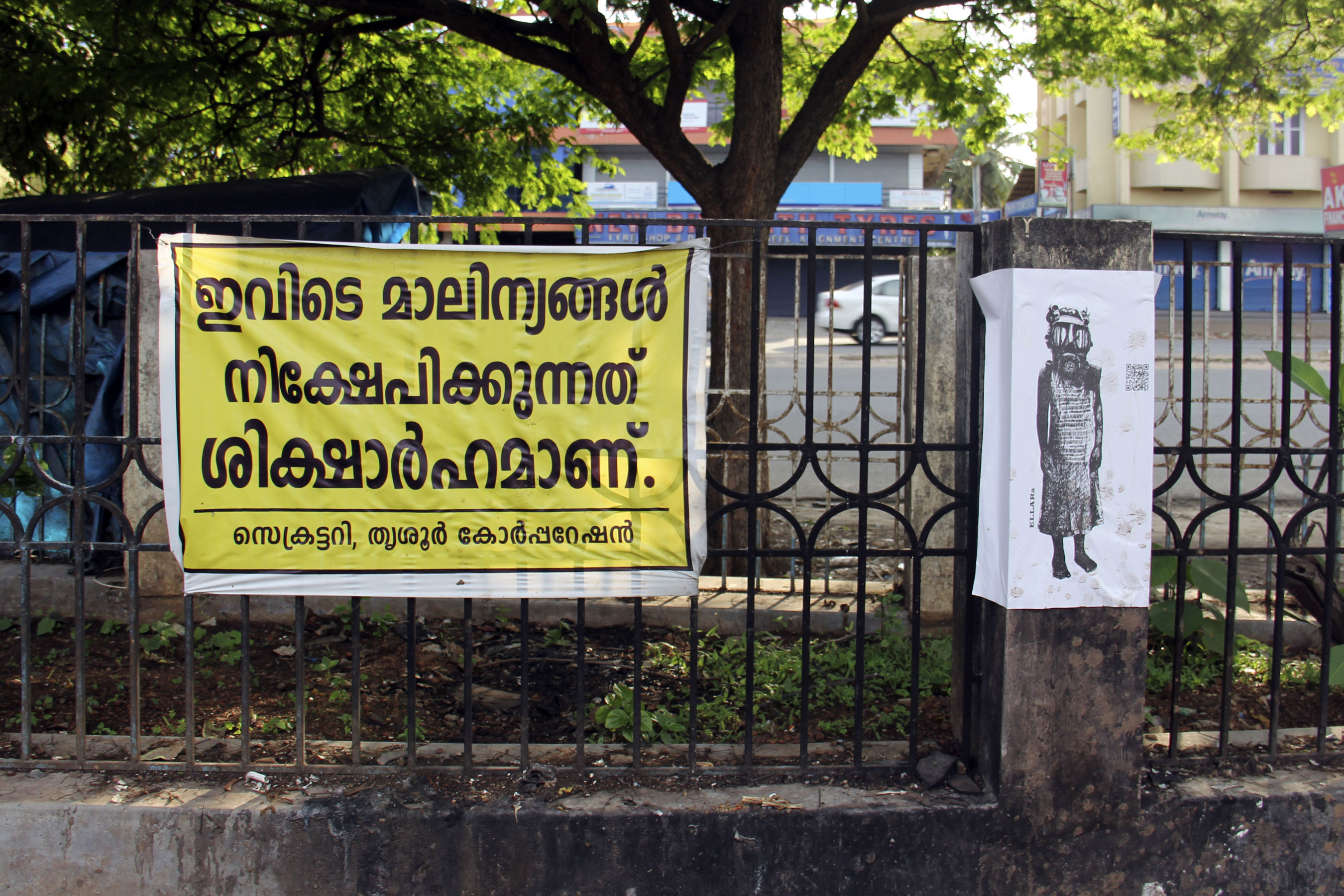
We chose the street as both site and medium. A series of stark black-and-white posters appeared across the city, pasted onto the very walls that often stood beside these burning mounds of waste. The images were intimate and unsettling at once. Members of our own family, our parents and our daughter sat facing the viewer wearing gas masks.
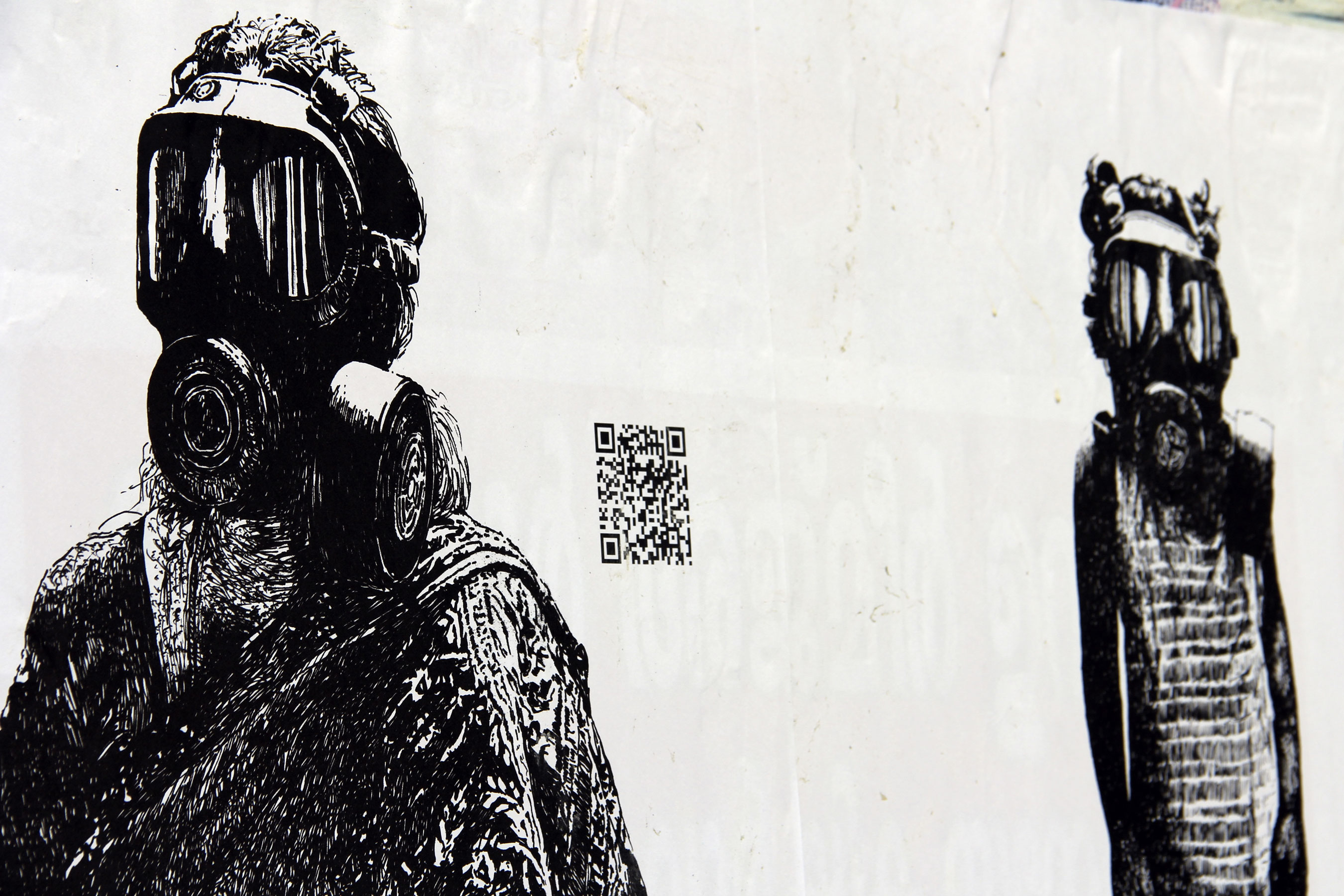
The masks were not props sourced for effect. One of our parents had preserved them from their time in the Middle East during the Gulf War. Objects once associated with distant conflict were now reactivated within a domestic, civic crisis. War had shifted geographies. The battlefield was the street outside one’s home.
Each poster carried a QR code. This was 2012, when QR in public space still felt new, almost intrusive. Scanning it led viewers to a photo blog we had been building over several months. The archive documented waste burning across Thrissur. Not as spectacle, but as evidence. Street after street. Pile after pile. Fire after fire. A dispersed but recurring urban event made visible through accumulation.
The project worked through juxtaposition.
The masked figures did not shout slogans. They did not accuse directly. They simply occupied the public visual field with a calm, frontal gaze. Their stillness contrasted with the violence of what the QR archive revealed. Together, they formed a loop. The poster pulled you in. The code led you deeper. The city implicated itself.
“A Direct Message” was not about aestheticising protest. It was about proximity. About collapsing the distance between policy failure and private life. Between municipal process and the air entering one’s lungs. By placing the work within everyday pedestrian routes, bus stops, junction walls, market edges, it refused the containment of gallery space and returned the conversation to where it belonged.
The street was both subject and audience.
What lingered for us was the image of preparedness. A family wearing gas masks not in panic, but in adaptation. As if toxic air had already been accepted as routine. That quiet acceptance was the most disturbing condition of all, and the work sought to interrupt precisely that.
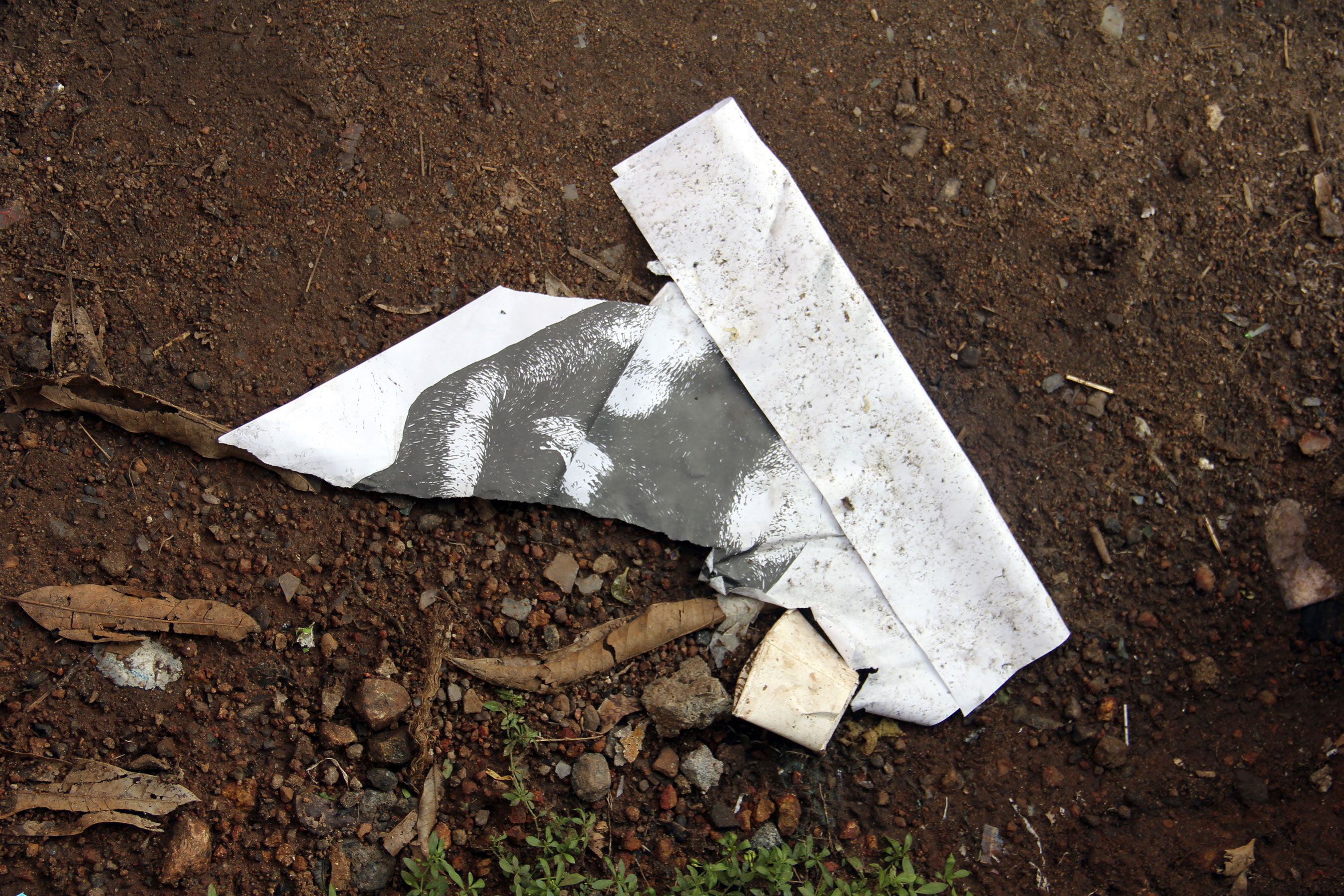
The posters weathered, peeled, were pasted over, and disappeared, much like the waste fires themselves. But in that passing, they left behind a question that refused to clear as easily as the smoke.