

The Measure of a Threshold
During one of our shoot days at The Regimented House, a small, almost fleeting moment unfolded and stayed with us. It wasn’t staged, and it wasn’t anticipated. It simply arrived, the way life often does, quietly testing what has been built.
The house sits on a generous plot, shared with the homeowner’s brother’s house. A pedestrian path runs between them. People pass by. Life presses close. Here, privacy and security are not distant ideas to be solved on paper. They are immediate, lived conditions, present every day, asking to be negotiated with care.
In response, we had shaped in-between spaces along the house’s periphery. Not quite inside, not quite outside. Not fully open, yet never shut. These are spaces that do not rely on walls alone, but on gradation, depth, and subtle cues. Spaces that hold a quiet tension, allowing presence without surrender. They do not block life out, but they do not give it free passage either.
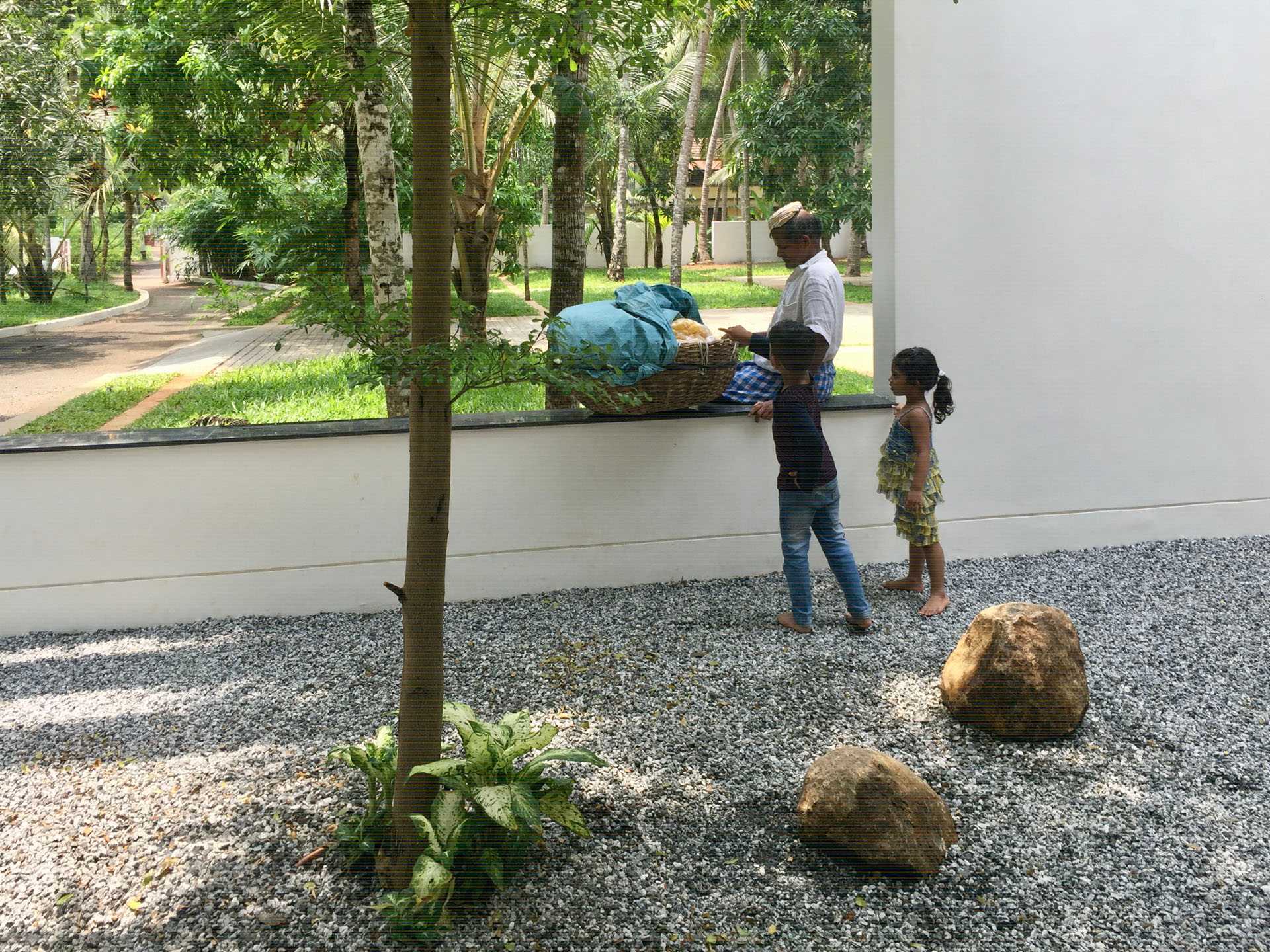
That day, a street vendor paused by, balancing a basket of sweets, and stepped into the compound as we watched. Two children approached from inside the house, curious, unguarded. A familiar scene, something you would expect on a village street. Unremarkable in itself, almost routine.
And yet, in that moment, the architecture was being asked a question.
Where does the house end? Where does the outside begin? Who belongs where?
The answer did not come through instruction or intervention. It was already there, embedded in the space.
The architecture held its line.
There was no confusion about where one stood. The threshold, though soft, was legible. The children remained within their zone, held gently but clearly. The vendor stayed where he should, without being stopped, yet without crossing over. What unfolded was an invisible negotiation, guided entirely by space rather than authority.
It was a quiet confirmation. That design, when done with care, does not announce itself in obvious gestures. It does not rely on force. Instead, it waits, and when the moment comes, it steps in and holds things together.
These are the moments we design for. The ones you cannot script, cannot predict, but must be ready for. Moments where architecture moves beyond form and begins to act.
To learn more about the project: