

Walking into an ancient etching | Kolkata, Winter 2025
Kolkata, Winter 2025
————————————————
The Place
Our visit to South Park Street Cemetery was never meant to be more than a pause.
It came as a recommendation from architect Abin Chaudhari when we asked him, almost casually, for places worth seeing in Kolkata beyond the obvious. He spoke of the cemetery with quiet certainty, as a place that deserved attention. It stayed with us. We recalibrated the day around it, deciding to begin there, before museums, buildings, and the rest of the itinerary unfolded.
We arrived early, thinking we would spend twenty minutes at most.
Instead, we stayed for over two hours.
Time, once inside, behaved differently. It slowed, stretched, then quietly disappeared.
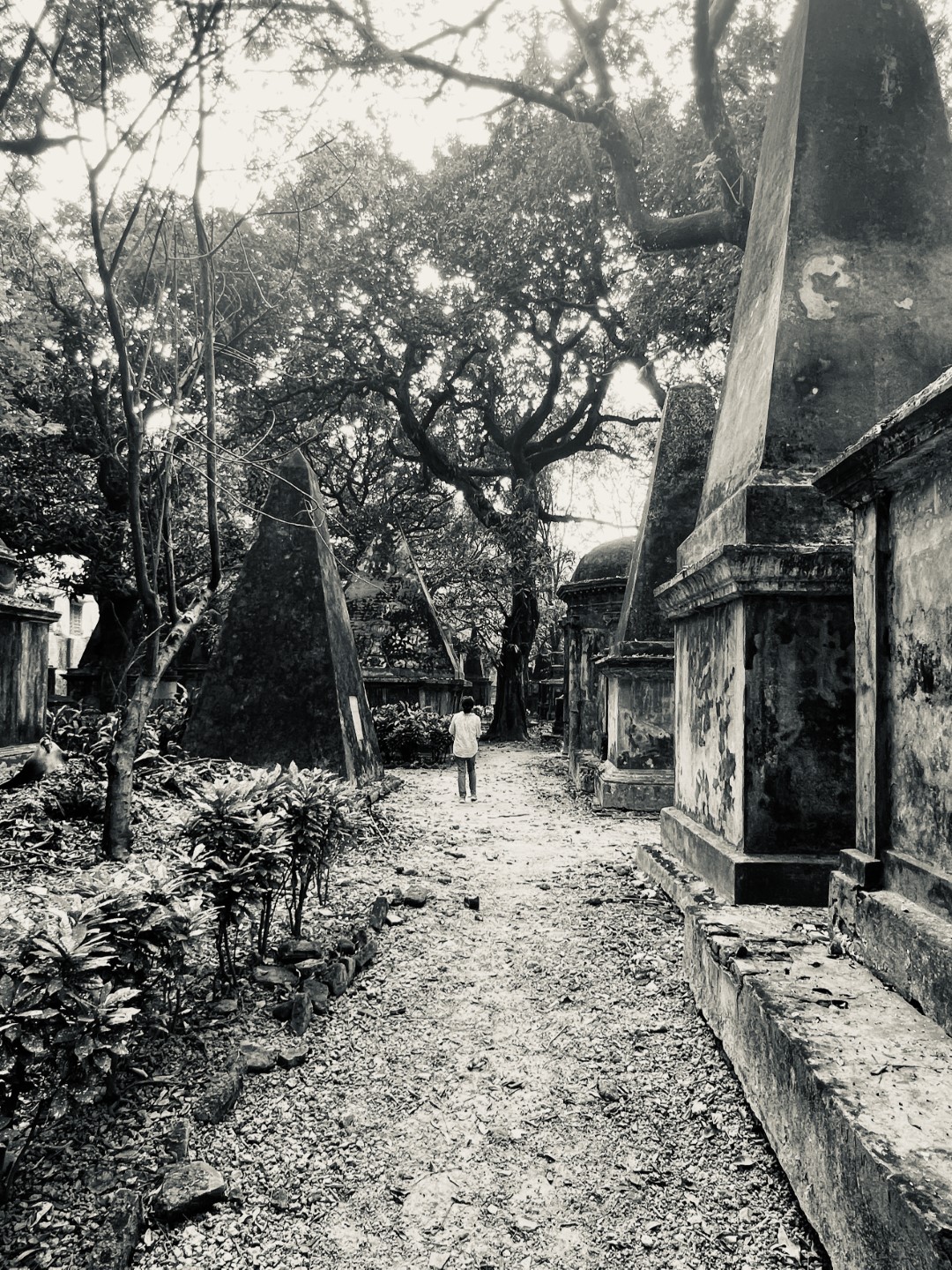
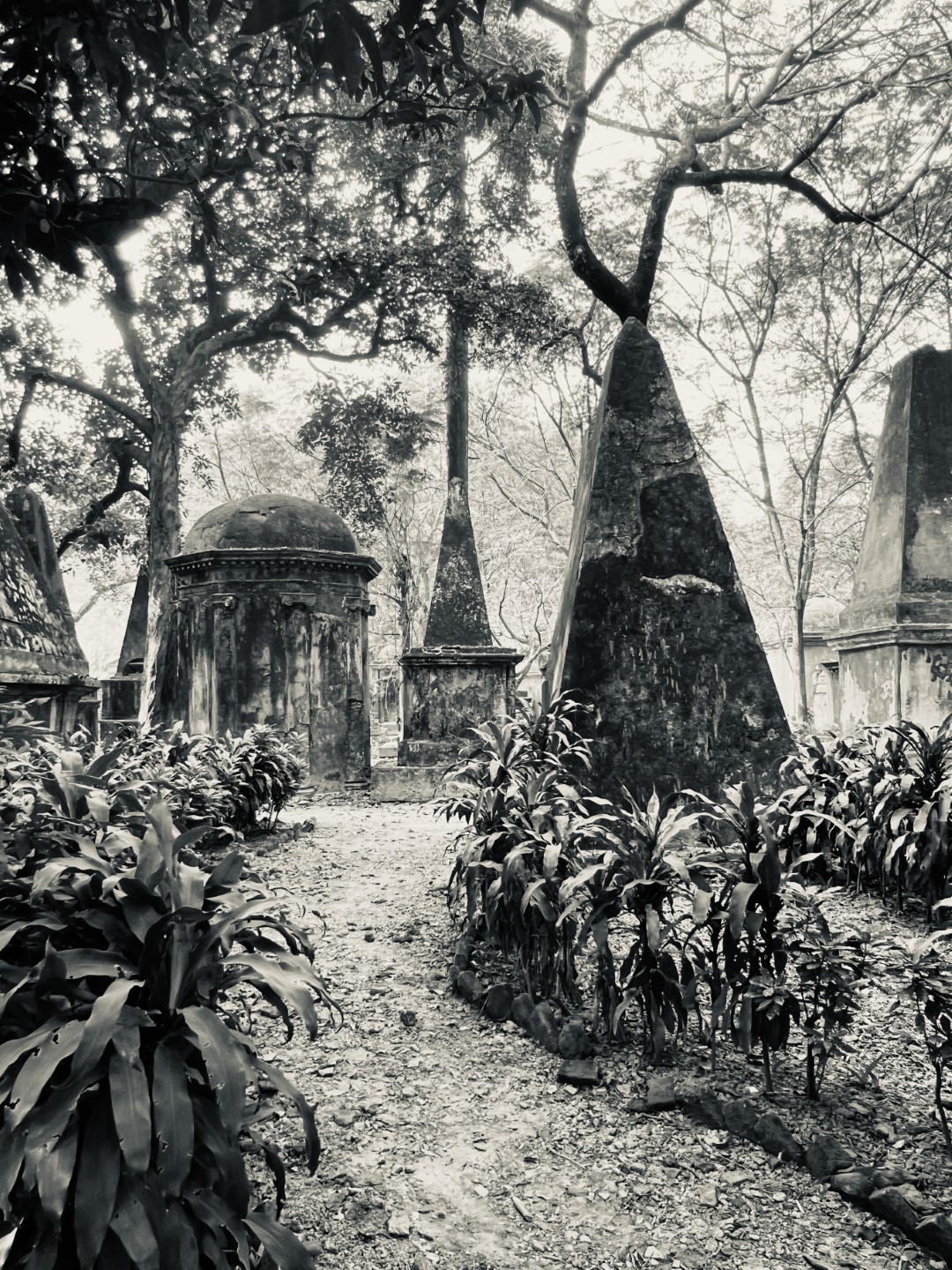
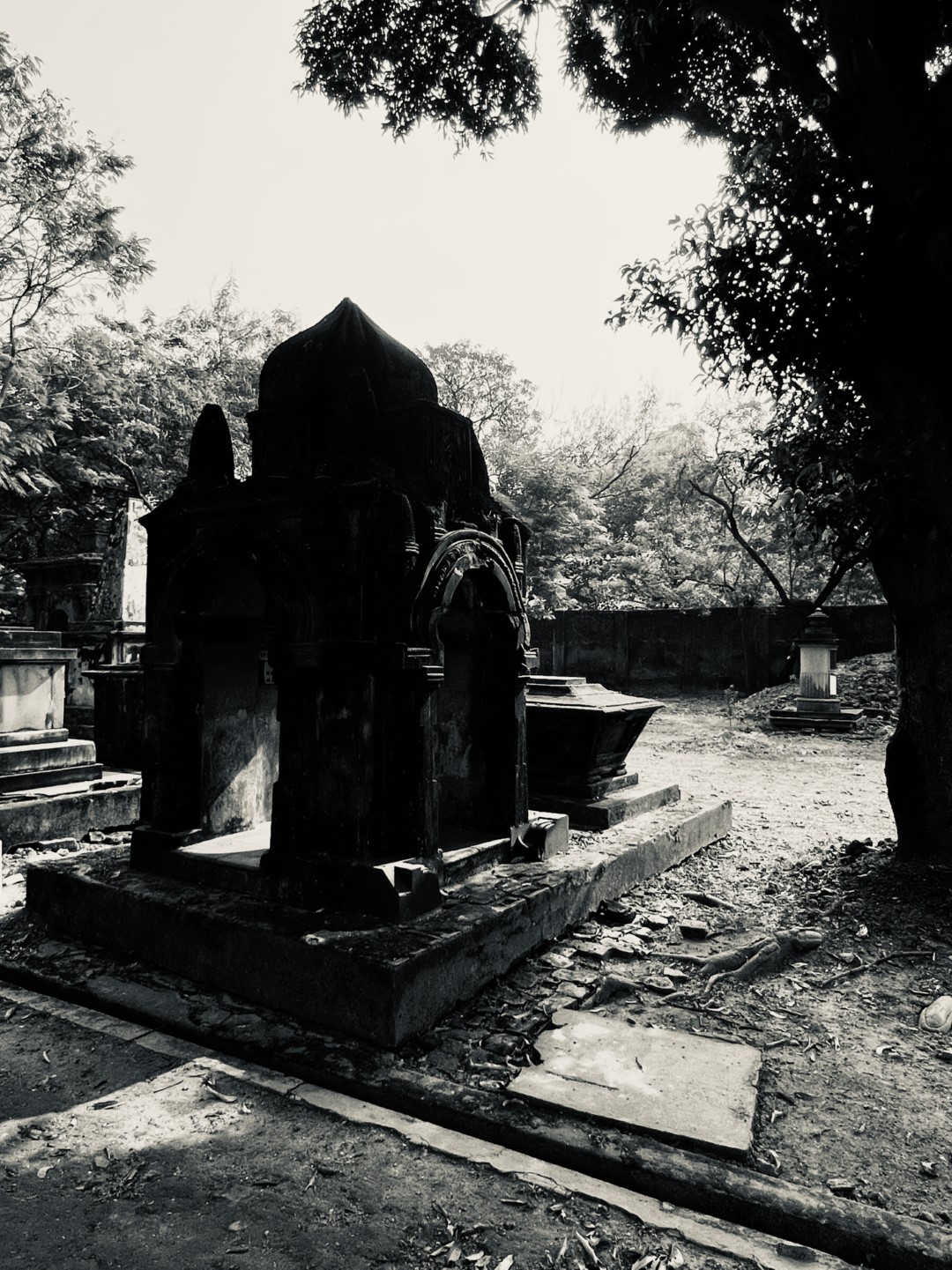
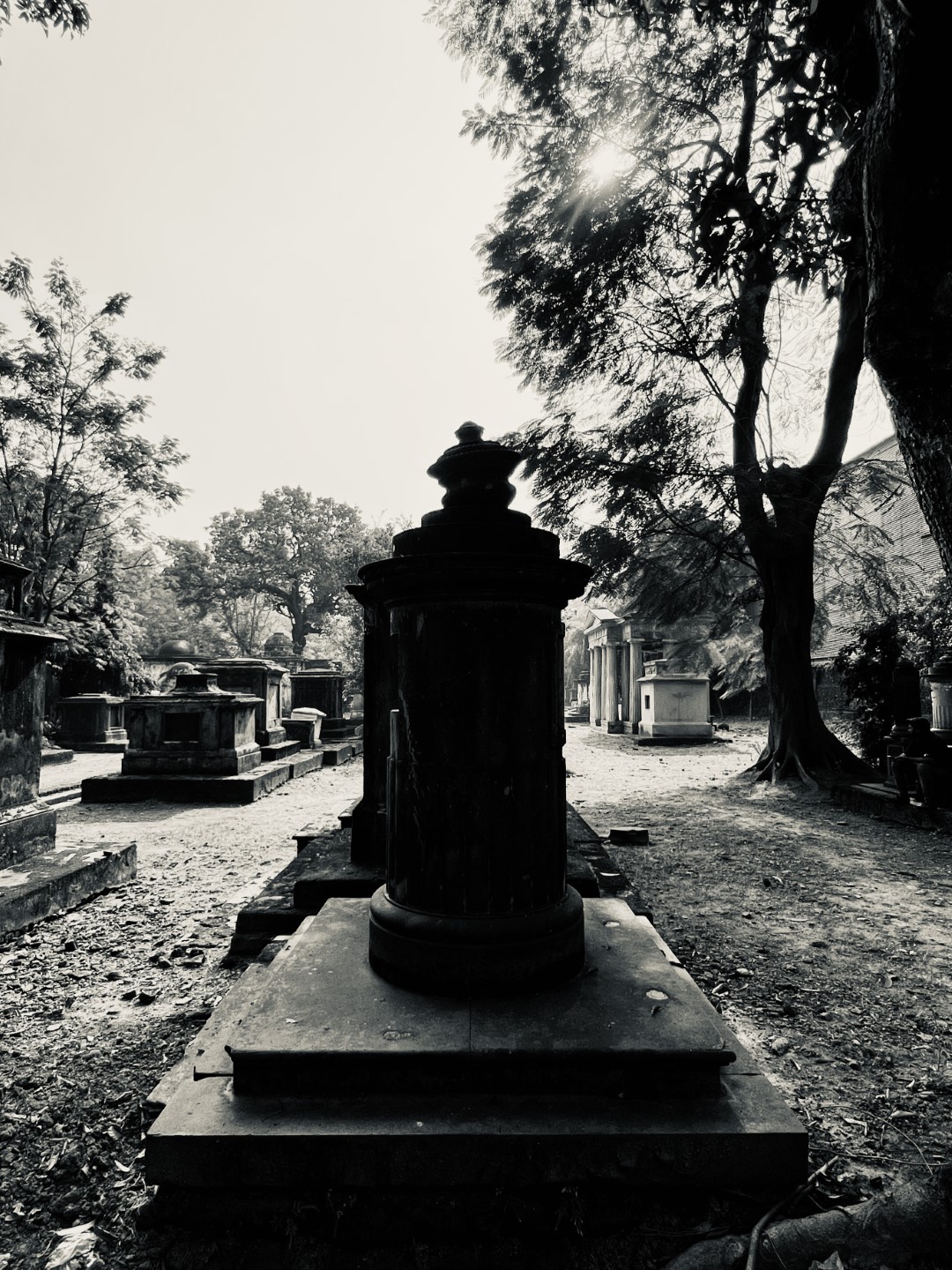
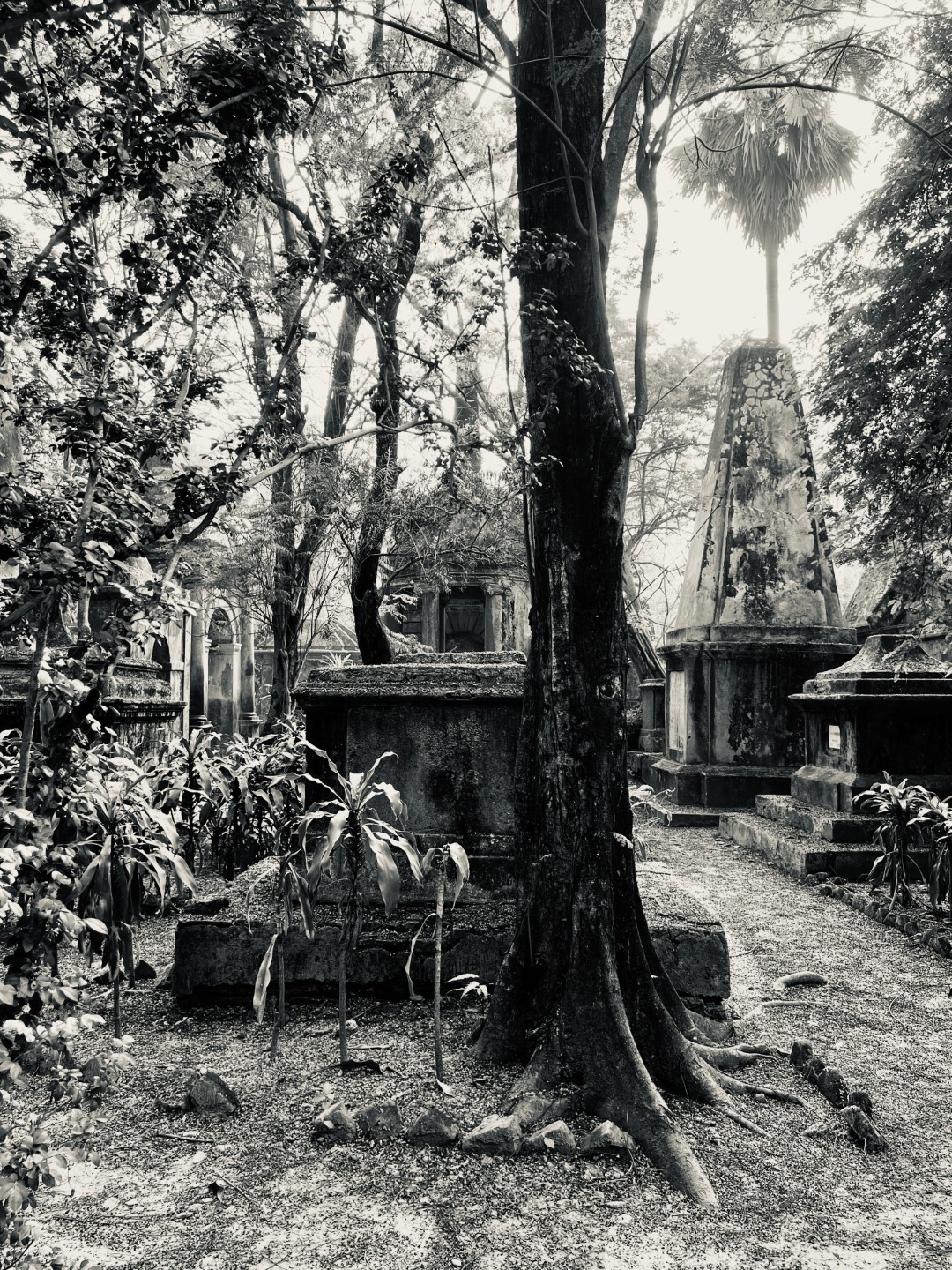
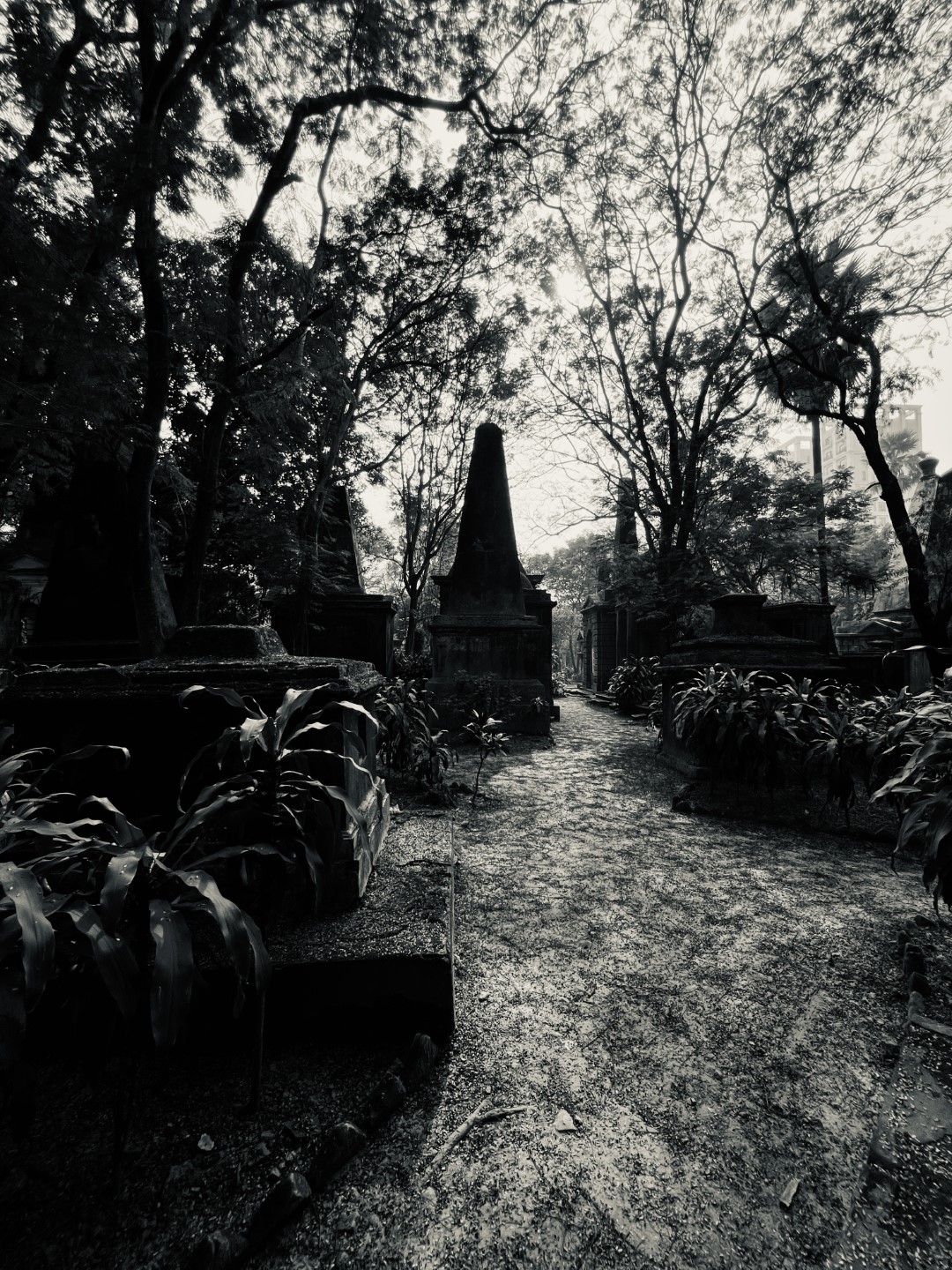
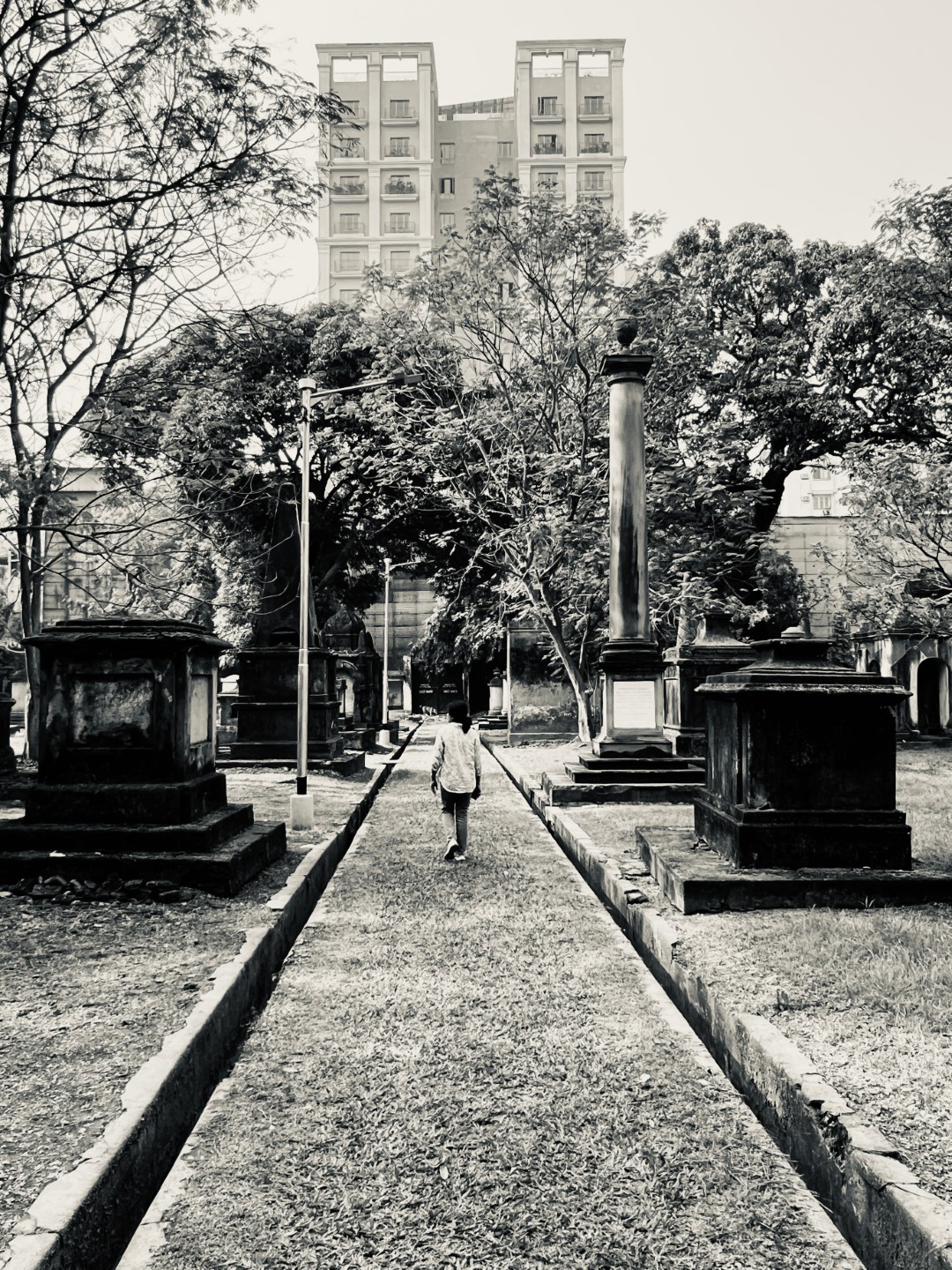
The entrance itself offered no warning of what lay beyond. Just inside the gates, the city did not disappear as the traffic noise lingered, settling into the background as a steady reminder that the cemetery had been caught by the city and slowly engulfed by it. The air felt heavier, cooler. Light filtered through large, old trees and fell unevenly on stone. Not the soft light of a park, but a sharper, more directional light that made edges pronounced and shadows feel deliberate.
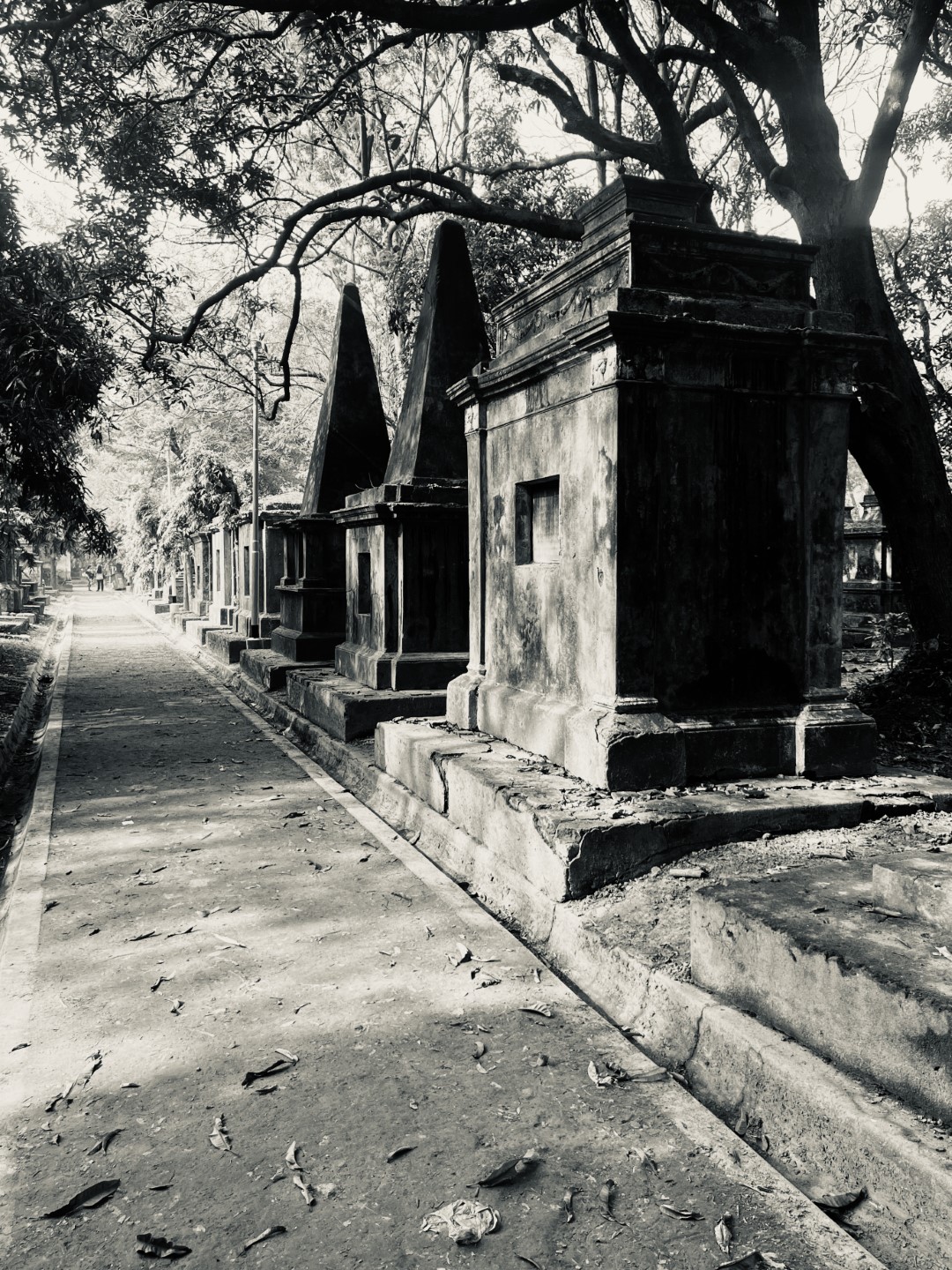
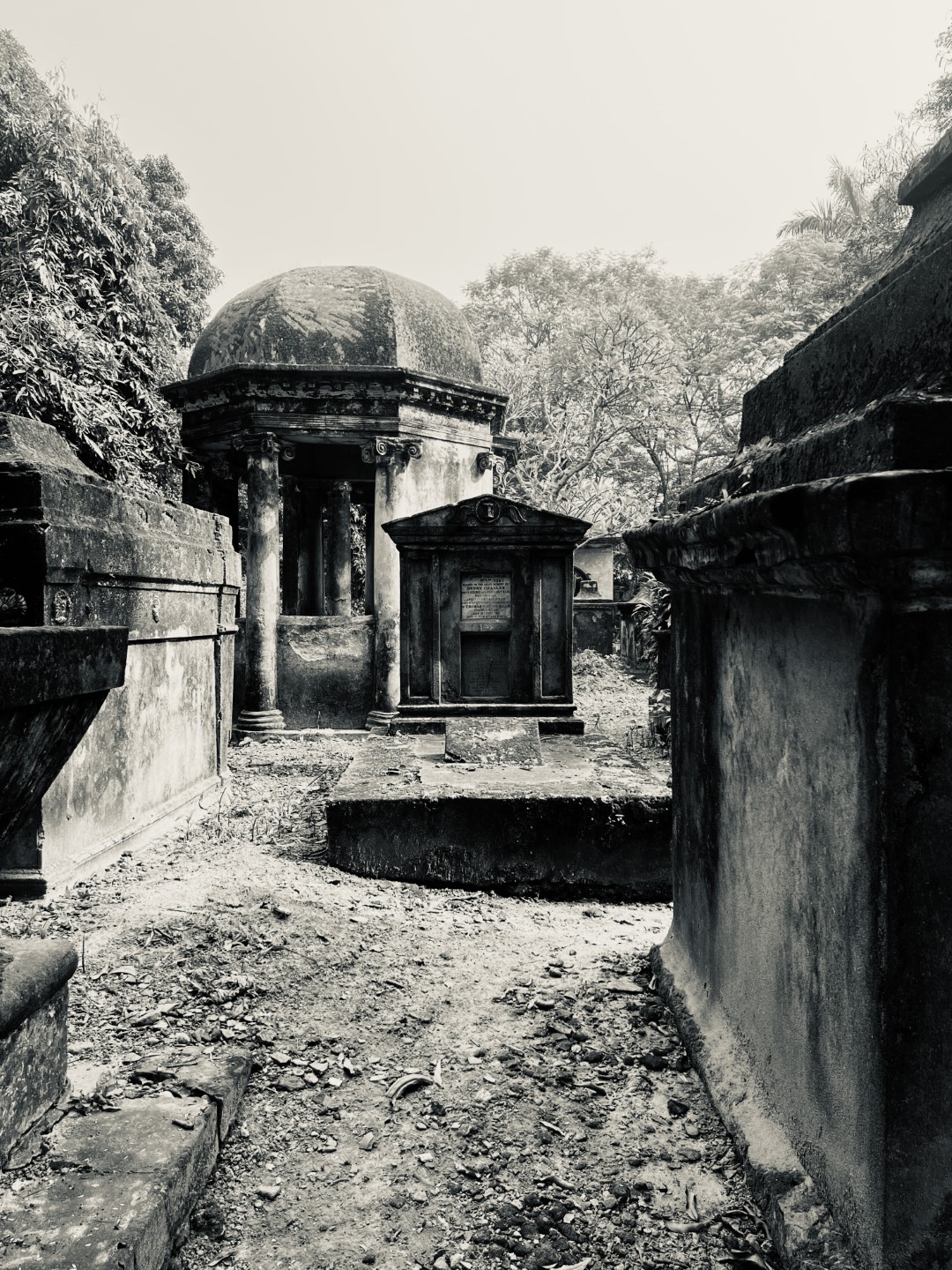
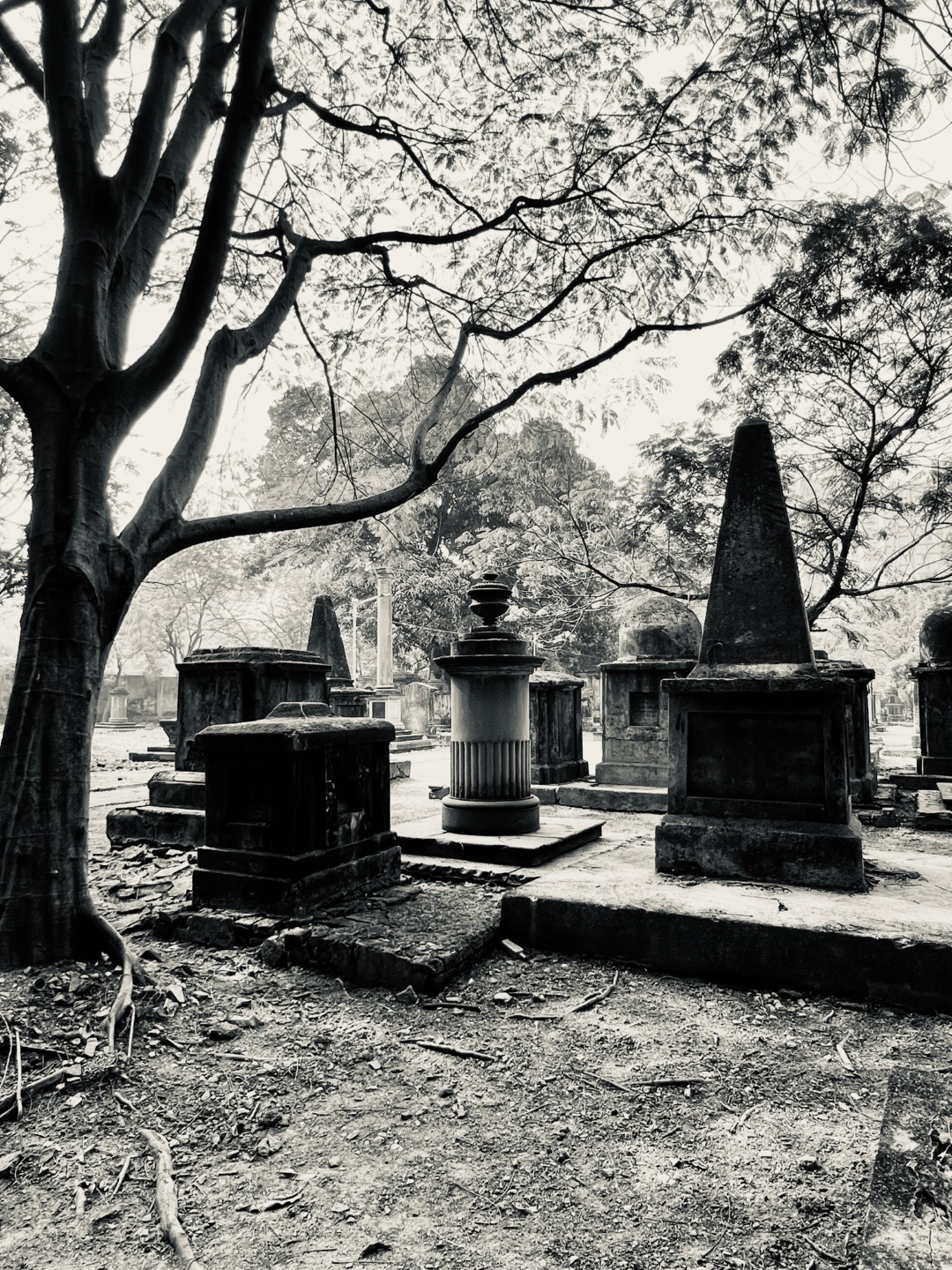
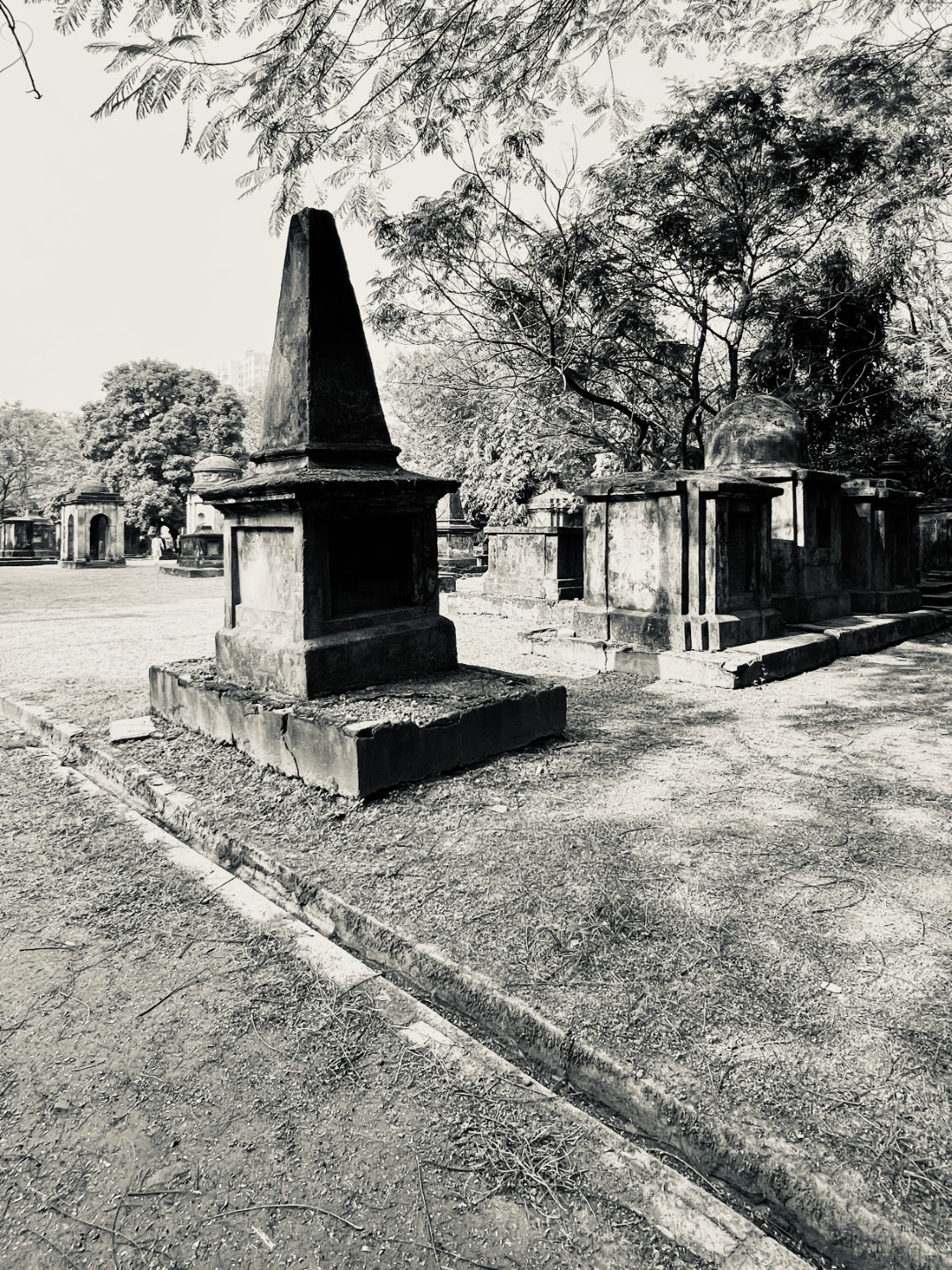
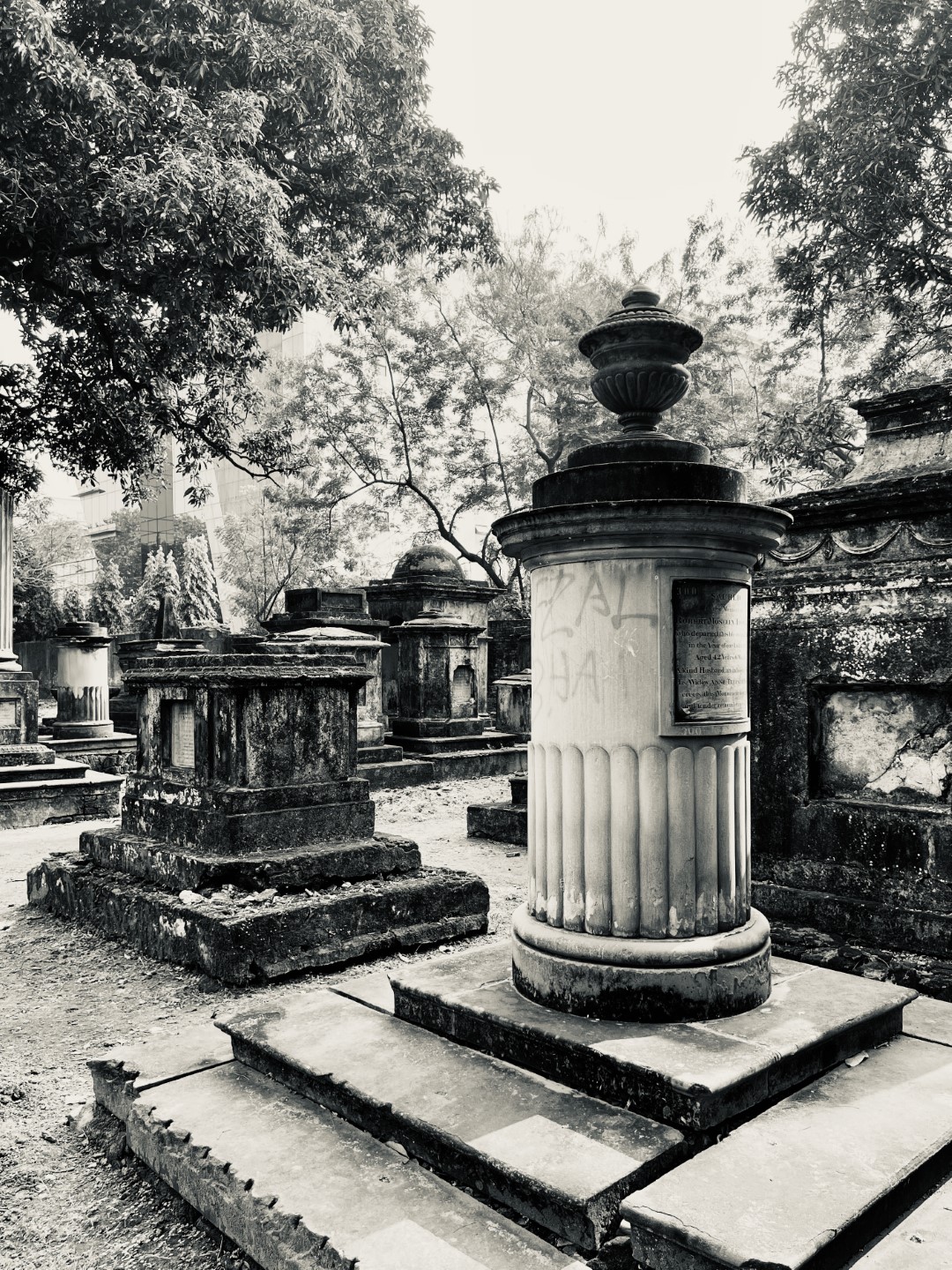
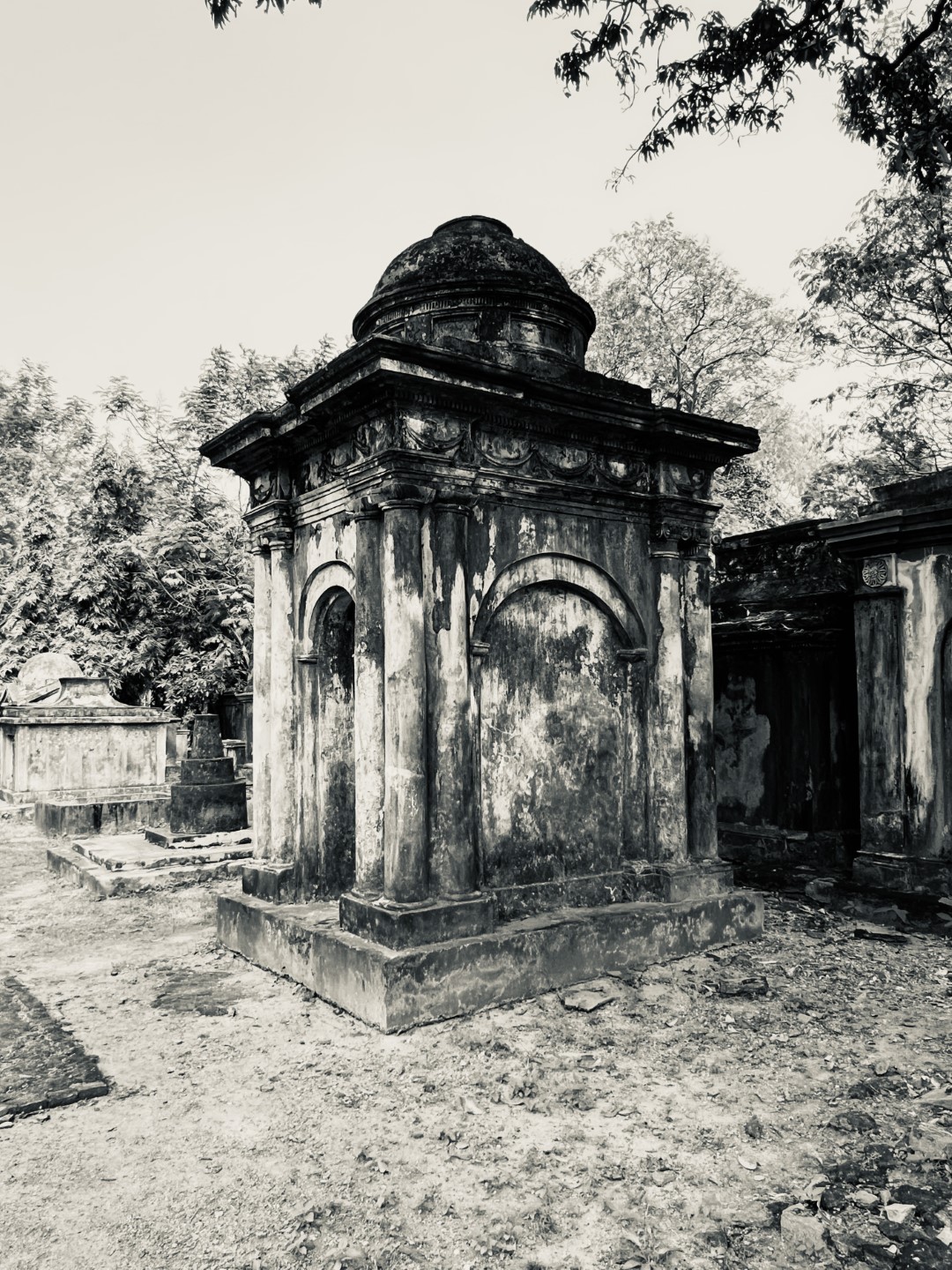
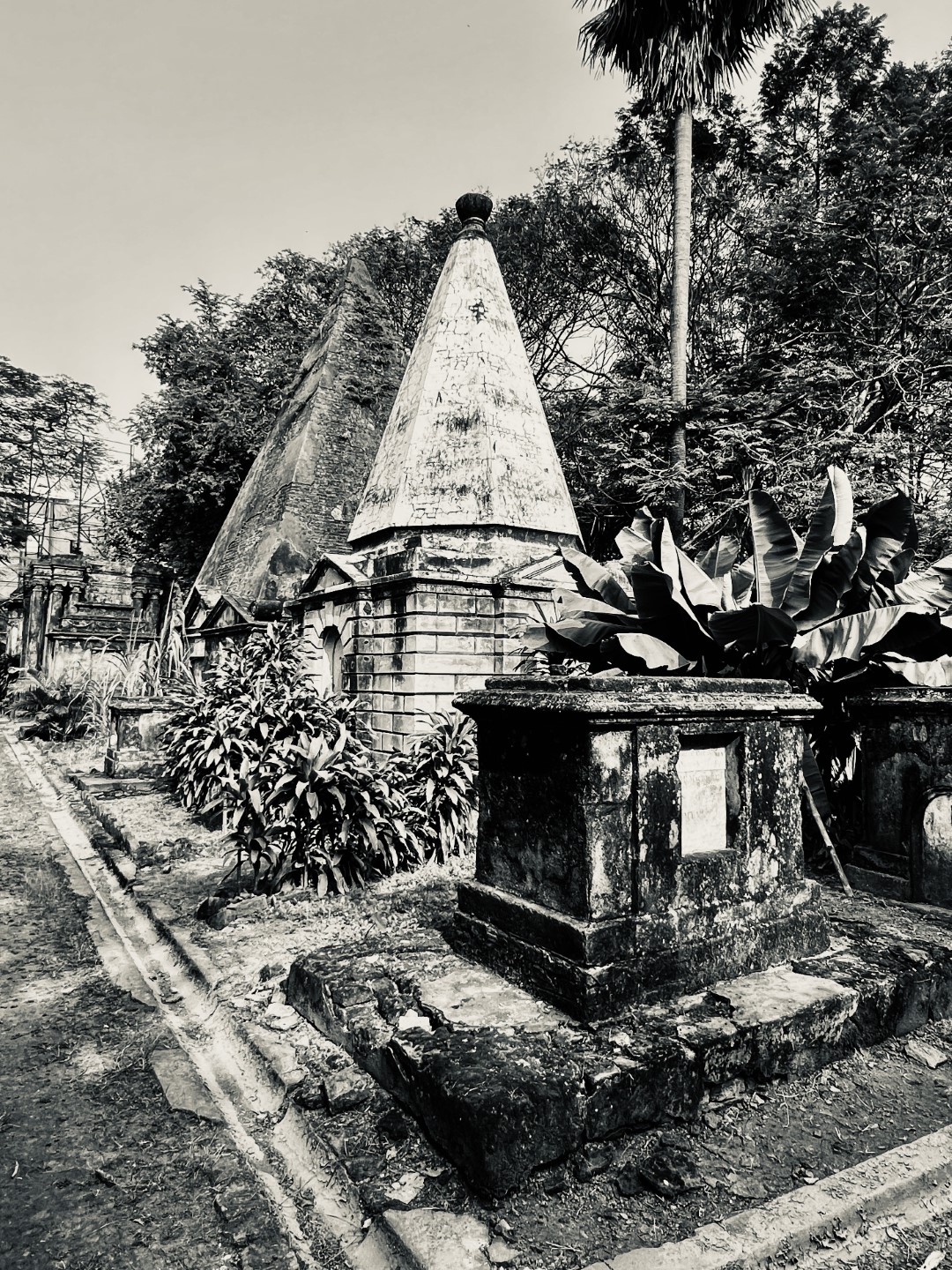
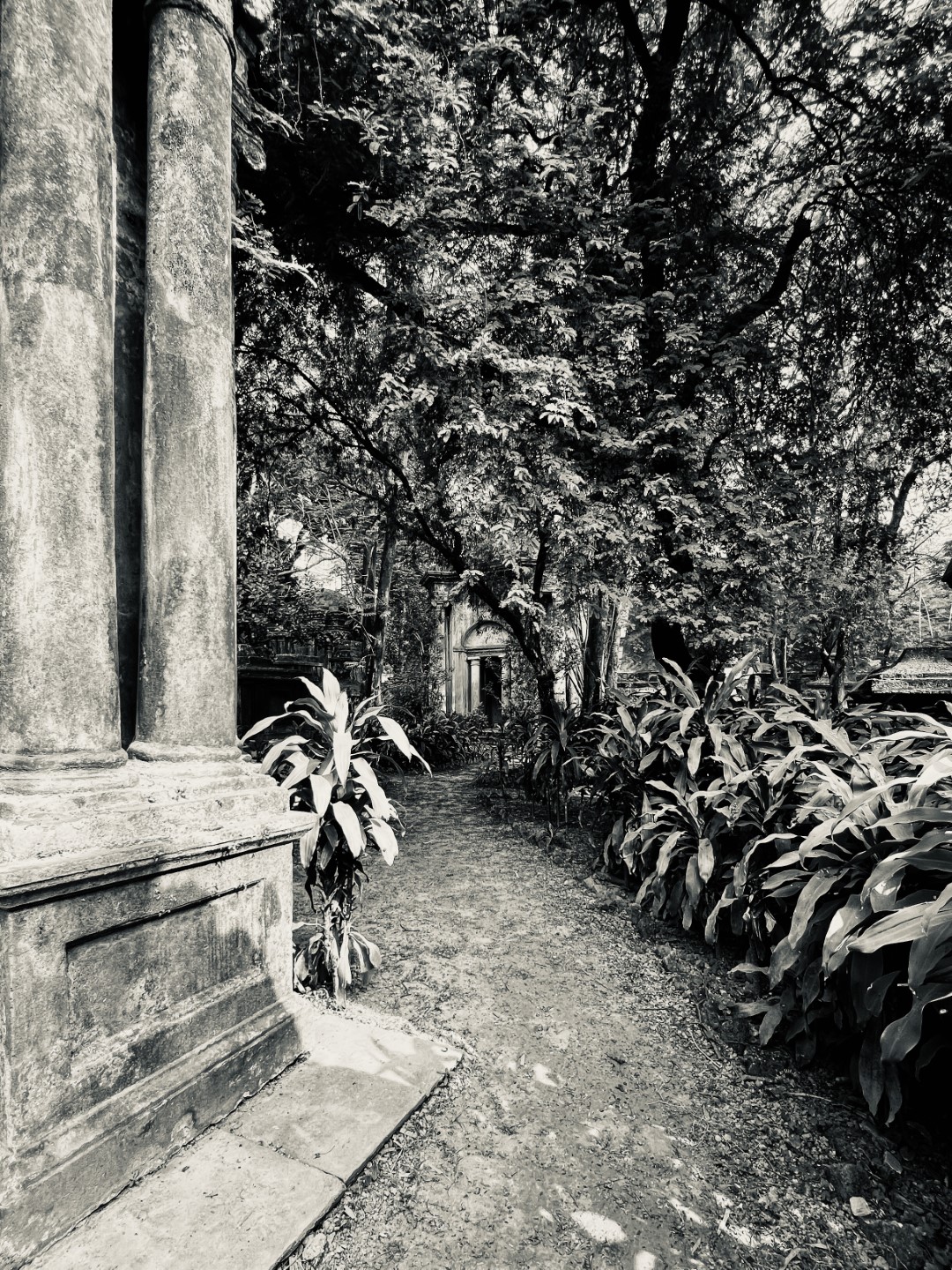
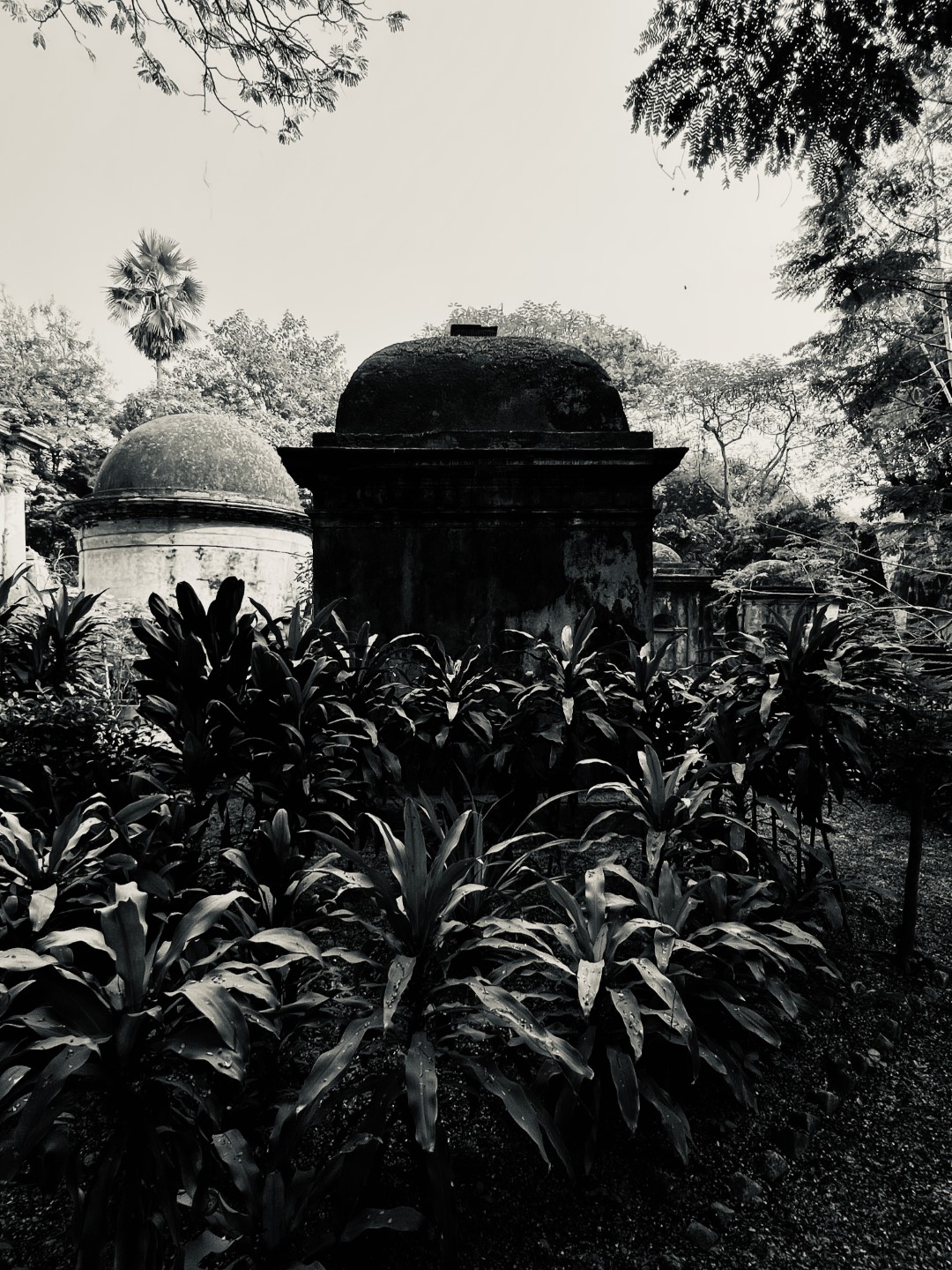
From the first few steps, it was clear this was not a cemetery one simply walks through. It demanded a certain pace. At the entrance, the paths were defined, almost formal, but the tombs around them resisted order, each following its own geometry and logic. Further in, the paths dissolved altogether, giving way to dense clusters where movement became intuitive rather than prescribed. Obelisks, plinths, columns, broken pediments, domes, classical porticos compressed into a dense field of memory.
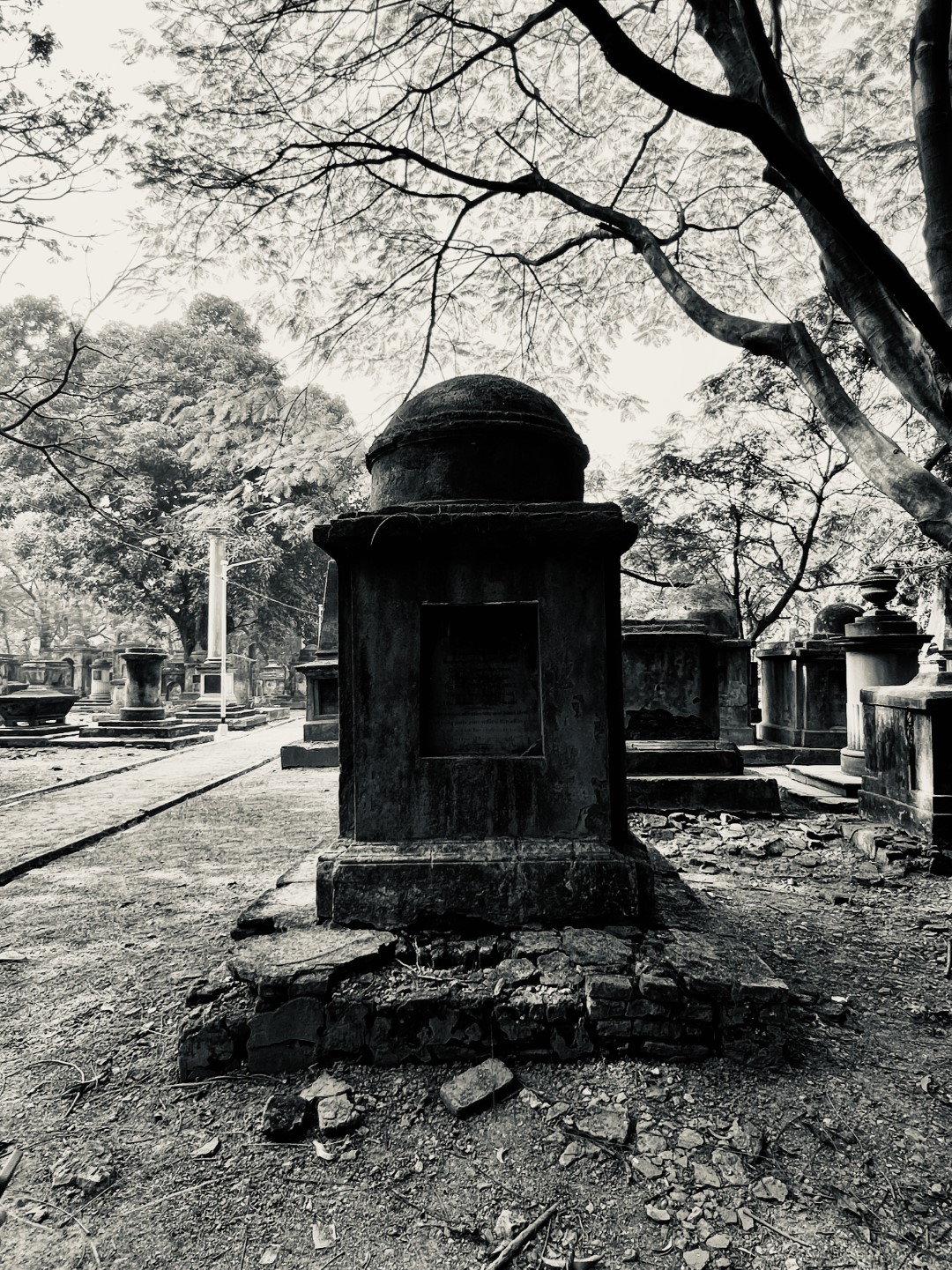
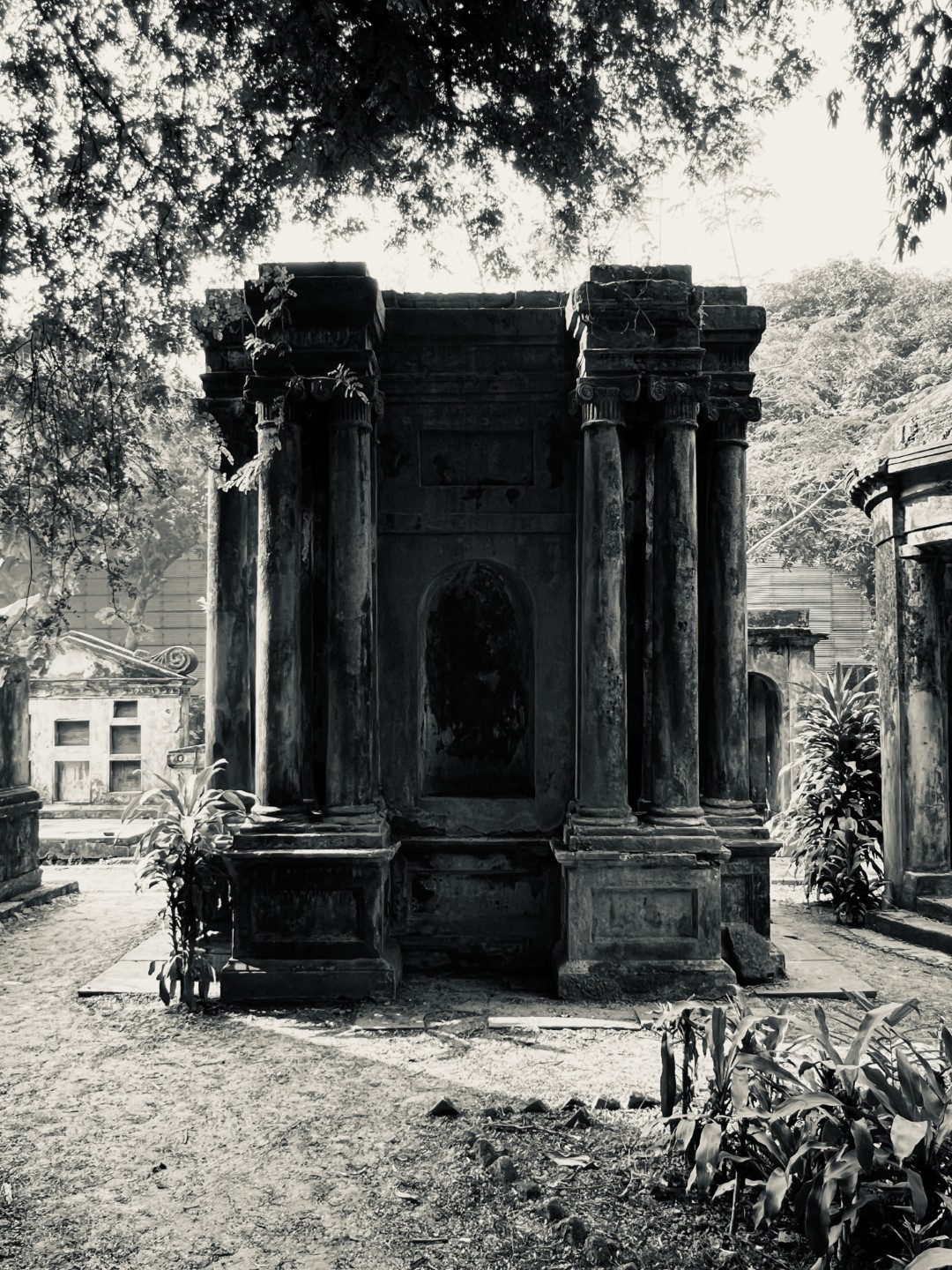
As architects, we found ourselves instinctively reading the place spatially before reading it historically. Alignment, proportion, rhythm. The way one tomb turned slightly away from the path, creating a pause. The way another rose abruptly, vertical and assertive, interrupting the canopy of branches above. Many structures were weathered, their surfaces softened by time, inscriptions fading into stone. Others remained surprisingly crisp, their mouldings intact, as if resisting decay through sheer presence.
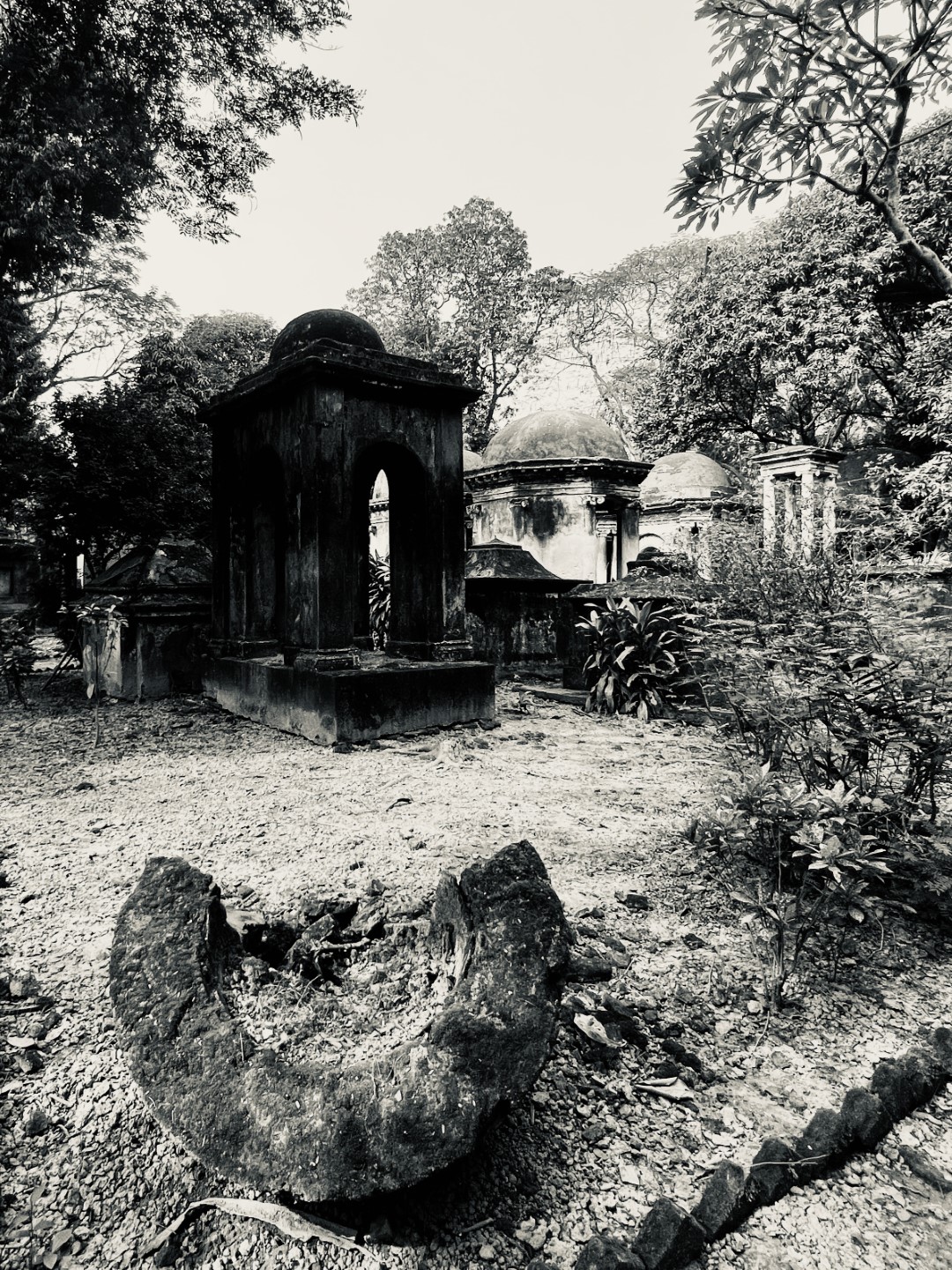
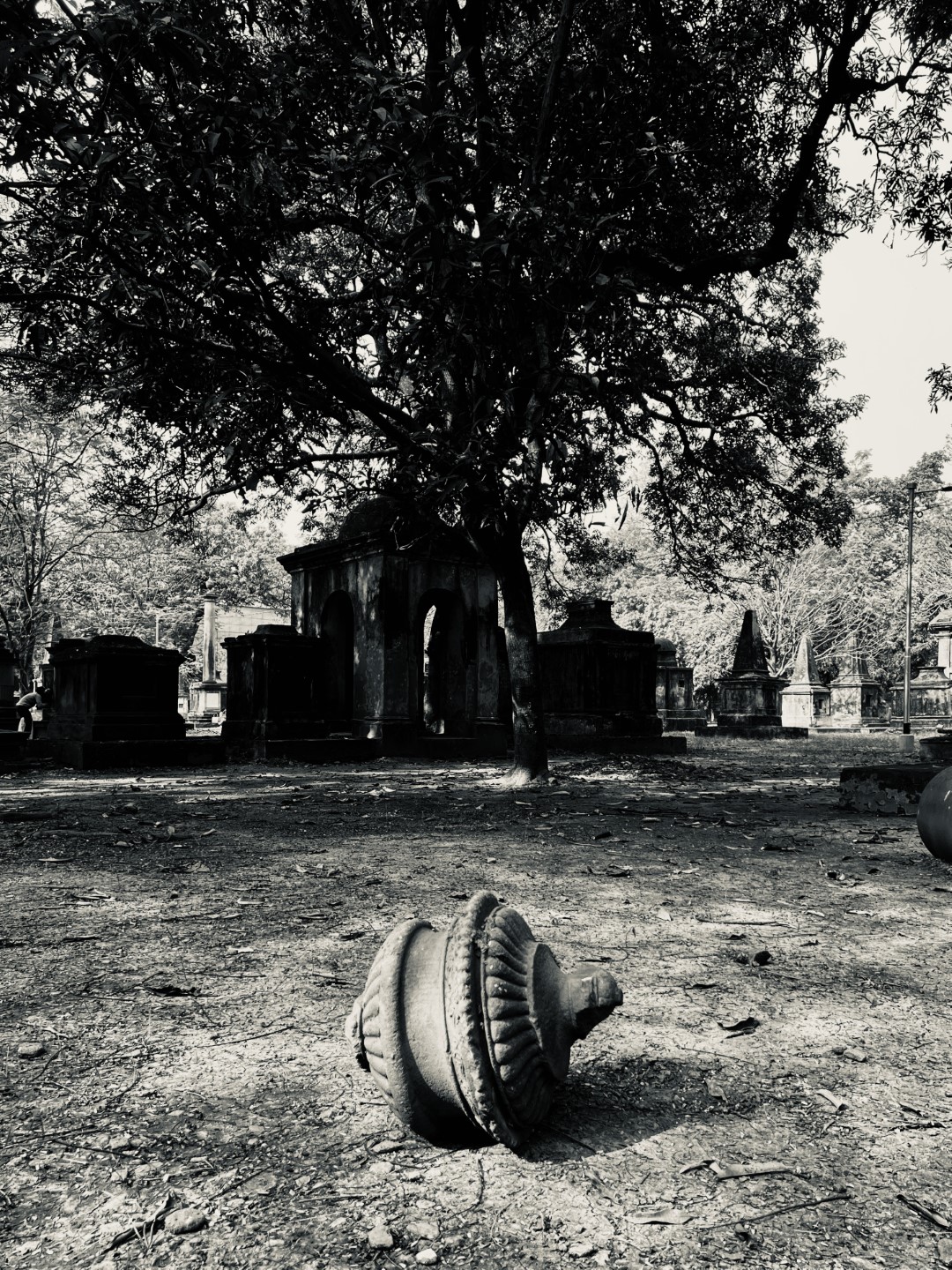
What struck us most was how complete the world felt. This was not ruin in the romantic sense of collapse. It was preservation through neglect, a place left alone long enough to become whole again on its own terms.
We wandered without a plan. There was no checklist, no guidebook in hand. We did not know who was buried where. We read names when they were legible, but often they were not. Moss obscured dates. Stone cracked. Some plaques were empty, as if memory itself had been carefully removed.
Yet the absence of information did not weaken the experience. If anything, it strengthened it.
Each tomb carried a weight far beyond its factual content. These were not anonymous graves, even when names were unreadable. The architecture itself held memory. Proportion became biography. Scale suggested status, ambition, grief. A tall obelisk spoke of assertion and permanence. A low plinth felt intimate, restrained. Classical columns referenced worlds elsewhere, their language intact even under a distant tropical sky.
At times, it felt less like walking through a cemetery and more like walking through a city that had stopped breathing but refused to disappear.
Trees grew around structures, roots lifting stone bases, branches weaving through cornices. Nature was not erasing architecture here. It was collaborating with it. Shade fell unevenly, creating moments of high contrast that felt almost theatrical. We stopped often, not to photograph immediately, but simply to stand and absorb.
There was a strange calm, but not the calm of peace. It was the calm of suspension.
A place frozen in time, but not static.
The longer we stayed, the more disoriented we became. Without clocks, crowds, or destinations, time dissolved into wandering. We circled back unknowingly to places we had already passed. Paths felt familiar and unfamiliar at once. The repetition of forms, combined with subtle variation, created a rhythm that was almost meditative.
Only later, after leaving, did we realise how long we had been inside.
At the time, it felt like minutes.
It was only after the visit, when we began reading about South Park Street Cemetery in detail, that a second layer of shock set in.
————————————————
The Names
What we had experienced intuitively was confirmed through later reading. The cemetery holds some of the earliest European burials in the city, figures who shaped colonial Calcutta in its formative years. Sir William Jones, the scholar whose work bridged languages and cultures. Henry Louis Vivian Derozio, poet and reformer whose ideas influenced generations. Rose Aylmer, whose early death inspired Walter Savage Landor’s poem “Rose Aylmer”, a few lines of restrained grief that have outlived centuries:
“Ah what avails the sceptred race,
Ah what the form divine…”
Reading the poem after standing near her grave altered its tone entirely. The restraint felt heavier. The simplicity sharper.
Literature, suddenly, was no longer distant.
Even names we never expected to encounter were quietly present. Charles Dickens came to mind not merely as a literary association, but because his son, Walter Landor Dickens, is interred here. We had known Dickens through his writing, of course, but discovering this connection later was startling. Suddenly, the atmosphere we had felt made sense. The compressed lives, the ambition and fragility of empire, the distance from home, the quiet weight of loss. Walking among these tombs felt like stepping into the margins of a nineteenth century novel, where architecture carries as much narrative force as people, and where personal histories unfold within larger, often unforgiving, worlds.
That was perhaps the most powerful realisation. We did not need to know the biographies beforehand. The space itself communicated them.
South Park Street Cemetery does not explain itself. It does not label or interpret. It simply exists, dense with meaning, allowing visitors to project, imagine, and later confirm.
The mood throughout was unmistakable. Somber, yes, but not oppressive. Dignity without reverence. Decay without despair. The black and white photographs we took were not an aesthetic choice so much as an inevitability. Colour felt irrelevant. The place already existed in a palette of stone, shadow, and filtered light.
Later, when we shared some of these photographs on Instagram, architect Pinkish Shah commented that it looked like “walking into an ancient etching.”
The phrase stayed with us. We thank him for it, as it now forms the title of this piece.
————————————————
The Meaning
South Park Street Cemetery is a lesson in permanence without maintenance, in how material ages when allowed to do so honestly. It shows how architecture carries meaning long after function disappears. These tombs no longer serve their original ritual purpose. Yet they continue to shape experience, atmosphere, and memory.
In a profession often obsessed with the new, the cemetery reminds us that architecture’s deepest value may only emerge after it is no longer actively used.
The place resists urgency. It resists consumption. It demands presence.
When we finally left, stepping back into the city felt abrupt, almost intrusive. The noise returned too quickly. The pace felt aggressive. We realised then that what we had experienced was not just a visit, but a temporary relocation into another temporal condition.
South Park Street Cemetery does not ask to be preserved as a monument alone. It asks to be experienced slowly, without agenda. It rewards wandering, ignorance, and curiosity equally.
What began as a brief stop became one of the most affecting spatial experiences of our time in Kolkata.
Not because of what we knew. But because of what the place allowed us to feel, before we knew anything at all.